According to the ministry data, Indonesia recorded 63,769 suspected measles cases in 2025, with 67 deaths. The number of suspected measles increased by 147 percent compared to 2024.
In 2026, 8,810 suspected cases and five deaths were recorded. Around 67 percent of confirmed cases had no history of immunization.
Outbreaks were reported in 87 districts and cities in 2025, and in 24 districts and cities at the start of 2026.
These figures, which place Indonesia as the country with the second-highest number of measles cases in the world after Yemen, are extremely concerning - considering that measles can cause death, especially in children.
Furthermore, measles can be prevented through immunization, which has been found to be effective in limiting the spread of this disease.
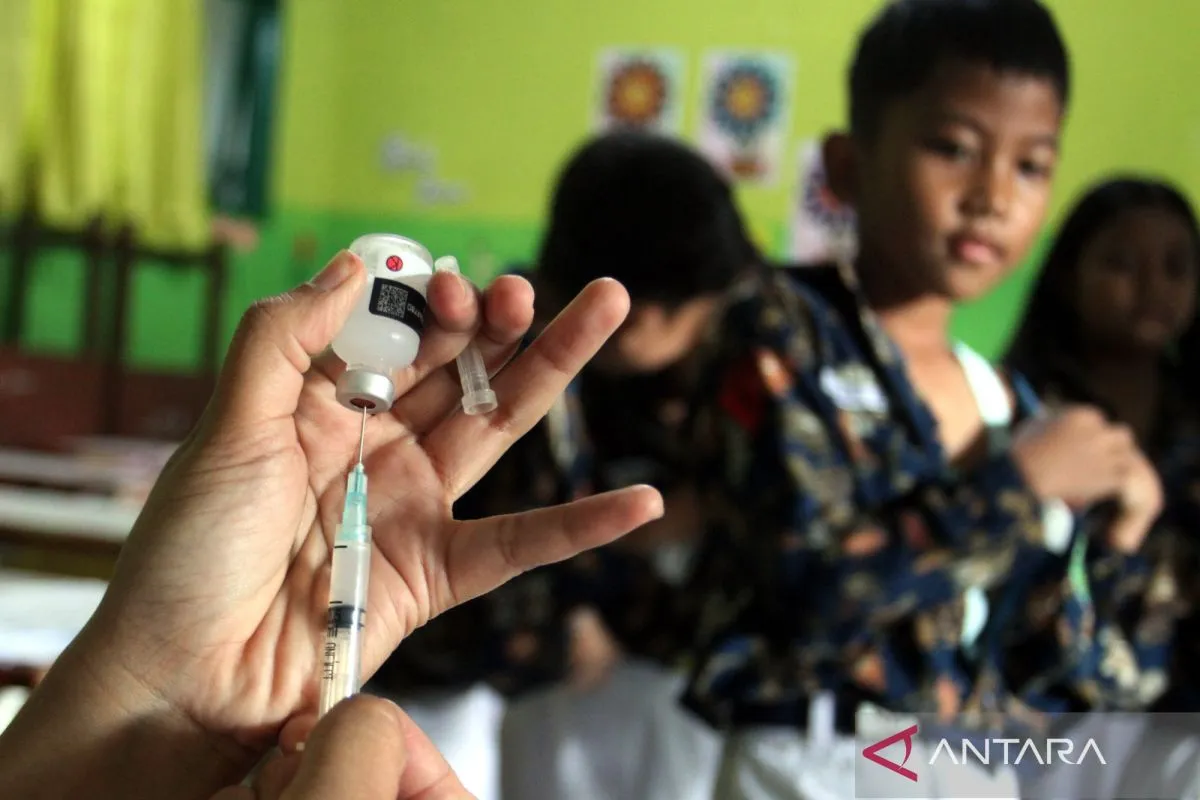
Health Minister Budi Gunadi Sadikin has called for urgent measles immunization as outbreaks spread across multiple regions, warning the disease poses fatal risks to children and could worsen during the upcoming Eid holiday.
He stressed that immunization remains the most effective safeguard, noting the measles vaccine has been used for decades worldwide to curb transmission.
Parents must take responsibility to protect their children by ensuring they receive measles immunization, he emphasized.
Sadikin warned that children under five are particularly vulnerable, with measles capable of causing fatal complications.
He added that refusing immunization endangers not only individual children but also schools and communities.
Vaccination
The ministry’s director general of pharmaceuticals and medical devices, Lucia Rizka Andalusia, stated that the provision of vaccine is a key factor in controlling measles outbreaks, in addition to surveillance and early case detection.
The government ensures it has sufficient stocks of measles-rubella (MR) vaccine, she added.
As of March 6, 2026, the central government has approximately 9.5 million doses of MR vaccine, while approximately 6.6 million doses have been distributed to provincial, district and city health offices, as well as community health centers (puskesmas).
These vaccine stocks are now prioritized to support the implementation of the Outbreak Response Immunization (ORI) and catch-up campaign in 102 districts and cities across 11 priority measles control provinces.
She also emphasized that the MR vaccine used in the national immunization program has undergone a rigorous evaluation process by the World Health Organization (WHO) for its safety, quality and efficacy.
Based on studies and clinical trials, she said the MR vaccine has been shown to be highly effective in significantly boosting children’s antibody levels. Research shows a significant increase in antibodies after vaccination, with seropositivity rates reaching over 90 percent in vaccinated children.
To achieve herd immunity, vaccination coverage must reach 95 percent.
However, according to the Health Ministry data, the first dose of MR vaccine in Indonesia was only 82 percent in 2025, while the second dose was 77.6 percent.
Counter the anti-vax
Among the factors behind the low vaccination coverage in Indonesia is the people, in particular parents, who opposed to vaccines or the anti-vax.
Researchers identified that parents are generally against the MR vaccine due to a combination of religious concerns regarding its ingredients, fears about potential side effects and safety as well as distrust of pharmaceutical companies and the government.
Many parents express significant concerns of events following immunization, such as fever, swelling or more severe outcomes like disability of even death.
Some others are influenced by misinformation and hoax, spread widely through social media. which have linked the vaccine to various health issues, including allergies and paralysis.
In fact, reactions that may appear after immunization are generally normal and temporary, according to Andalusia.
Common reactions include mild pain at the injection site, low-grade fever and skin rashes are usually resolve within 24 hours - as a normal sign that a child’s body is building immunity.
She also emphasized that vaccines only contain biological components that function to stimulate the body's immune system to recognize and fight disease - countering hoaxes that vaccines may contain microchips or biological weapons, or ingredients that are not halal according to Islamic beliefs.
Therefore, she called on the public to remain confident in registering their children for vaccination, as its benefits outweigh the feared risks.
Delaying vaccination can increase the risk of transmission because children who do not yet have antibodies can potentially transmit the virus to others around them.
Measles is one of the most infectious diseases, caused by a virus that spreads through droplets when an infected person coughs or sneezes, or through contact with contaminated objects.
Symptoms begin with a high fever and cough, leading to a red rash appearing all over the body.
Serious complications from measles are common in children, ranging from ear infections and diarrhea to potentially fatal pneumonia and encephalitis.
A single person with measles can infect up to 18 other people - underscoring the importance of immunization as an effective measure to prevent this disease.
Ultimately, it is important to realize that complete vaccination is one of the best investments we can make for our children.
Related news: Ministry warns of measles spike ahead of Eid holiday
Related news: Lawmakers push faster immunization amid measles surge
Editor: Primayanti
Copyright © ANTARA 2026


