Previously, Environment Minister Hanif Faisol Nurofiq requested the cessation of open dumping practices at Bantargebang following the landslide incident.
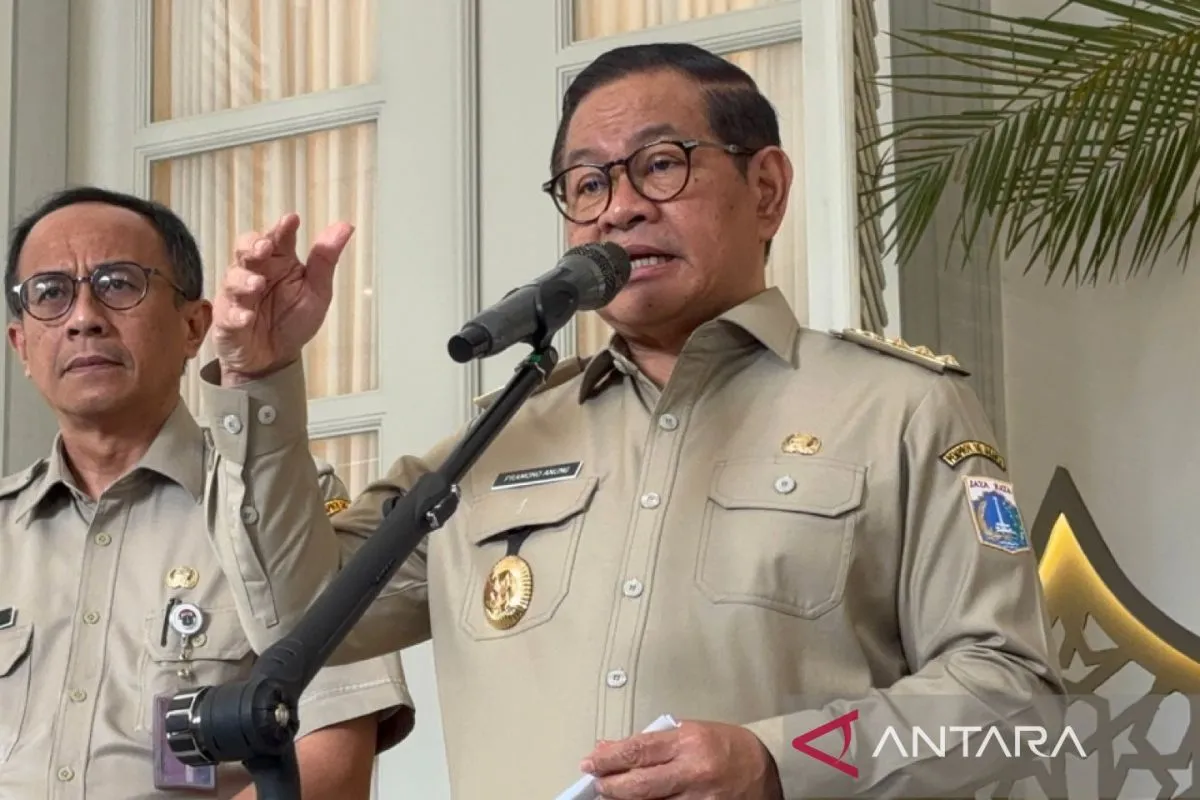
"For zone 4, we have implemented the Minister of Environment's directives," Jakarta Governor Pramono Anung remarked at the City Hall on Tuesday.
He explained that open dumping activities in zone 4A have stopped, whereas zones 2 and 3 continue to operate to handle Jakarta’s waste.
In addition, his office is also preparing plans to build a waste-to-energy plant (PLTSa) in the Bantargebang area. This project is estimated to require approximately 8 to 10 hectares of land.
Earlier, Minister Nurofiq stated that the landslide incident at the Bantargebang Landfill on Sunday (March 8) is a strong warning for the Jakarta Provincial Government to stop open dumping. He also called on all parties to participate in improving the situation.
"This incident should not have happened if management had been carried out according to regulations. The Bantargebang incident should be a lesson for us to immediately improve, for the safety of human life and environmental sustainability," he pointed out.
He said that the landslide, which killed five people, was evidence of the systemic failure of waste management in Jakarta and should no longer be tolerated.
Prior to the latest incident, landslides also occurred at the Bantargebang Landfill in 2003 and the collapse of zone 3 in 2006, which claimed lives and buried dozens of scavengers.
Furthermore, in January 2026, the foundation at the Bantargebang Landfill collapsed, dragging three garbage trucks into the riverbed. This was followed by another collapse of the garbage pile in March 2026.
In addition, the Jakarta Provincial Government is gradually shifting waste management to a new waste-to-fuel facility in North Jakarta, designed to process up to 1,000 tons of refuse daily and ease pressure on the overstretched Bantargebang landfill.
“We are currently commissioning the Rorotan facility. Hopefully, it will be completed soon so Rorotan can operate normally,” Pramono said on Monday (March 9).
He added that even at partial capacity, “1,000 tons per day is very good for current operations in Rorotan and will significantly reduce waste, perhaps by around 1,000–1,500 tons.”
The Rorotan Refuse-Derived Fuel (RDF) plant is expected to cut the volume of waste sent to Bantargebang in Bekasi, West Java, where daily inflows reach 7,400–8,000 tons.
Related news: Heavy rain raises danger of further landslides at Bantargebang: BNPB
Related news: Jakarta aims 1,000 tons daily at Rorotan RDF to cut Bantargebang waste
Related news: Landslide at Bantargebang Landfill kills 5, 4 still missing
Translator: Lifia Mawaddah Putri, Resinta Sulistiyandari
Editor: Azis Kurmala
Copyright © ANTARA 2026


