For Southeast Asia’s largest economy, the instability in global energy supplies is no longer a distant geopolitical concern; it is a direct threat to the nation’s fiscal heartbeat.
As a net oil importer, Indonesia finds itself in a precarious orbit. The surging uncertainty in global crude prices threatens to constrict the state’s fiscal space and destabilize a national economy still navigating a complex post-pandemic recovery.
Without anticipatory measures, domestic purchasing power is at risk of being eroded by rising logistics costs. This situation demands robust fiscal protection policies to ensure the domestic economy does not fall into crisis.
The primary point of concern remains the Strait of Hormuz, a critical global energy chokepoint that handles approximately 20 percent of the world’s crude oil shipments daily, which is currently under heightened Iranian surveillance.
Indonesia’s President Prabowo Subianto has identified this emergency as a strategic moment to reinforce energy sovereignty, signaling that efficiency is no longer an option but a mandatory step toward national self-reliance.
This "National Orchestration"—a synchronized, multi-sectoral response—aims to keep the national economic pulse steady, ensuring it is not held hostage by the increasingly erratic fluctuations of the international energy market.
Vanguard of efficiency
Indonesia’s strategy begins with a major push for efficiency within the public sector, intended to provide institutional leadership before calling on the broader public to follow suit.
This transformation includes the implementation of flexible work arrangements for civil servants (ASN), supported by strengthened digital platforms, strict limits on official travel, and the optimization of office building operations.
These measures represent more than a fleeting emergency response; they signify a fundamental, digital-based modernization of the bureaucracy.
In this context, the integration of technology has emerged as a primary instrument for modernizing labor governance, enabling a significant reduction in physical travel without compromising the quality of inter-agency coordination.
The administration is also adjusting educational models, balancing online and offline learning based on subject characteristics, although practical vocational training will remain in-person to preserve student competency.
These public sector energy-saving measures are scheduled to take effect in April 2026, targeting a consistent reduction in fuel and electricity consumption across all state institutions.
This efficiency drive is further supported by a broader strategy covering the education and public service sectors. Following presidential directives, these policies are expected to act as a catalyst for nationwide efficiency.
The government is also conducting a deep review of flexible work or work-from-home options as an effective means of curbing the mobility that contributes to fuel demand.
Beyond technical shifts, the government is emphasizing a culture of energy conservation as a key to national resilience.
While the government maintains stable subsidized fuel prices to act as a social safety net, it has urged the public to avoid panic buying that could disrupt market supplies.
Currently, national fuel stocks are reported to be secure at a level of 21 to 25 days, supported by a continuous cycle of domestic production and imports.
Supply diversification: a strategic pivot
To complement domestic efficiency, Indonesia is fortifying its energy security through a strategic diversification of import sources.
This move is designed to mitigate the risks of over-dependence on a single, volatile geopolitical region.
In a tactical realignment, a portion of crude oil imports is being shifted from the Middle East to the United States, while the government remains open to other partners, such as Russia, provided they offer competitive economic value.
This diversification reduces exposure to high-risk maritime routes like the Strait of Hormuz, which previously accounted for 20 to 25 percent of Indonesia’s total crude oil imports.
As a concrete step in this fortification, Indonesia has secured a US$15 billion energy procurement commitment through a trade agreement with the United States.
This strategy focuses on a "supply switch" to ensure route security without necessarily increasing the total volume of national imports.
The commitment includes US$7 billion for refined fuel products, US$4.5 billion for crude oil aimed at national reserves, and US$3.5 billion for the LPG sector.
All transactions are being conducted based on competitive market prices to benefit the state’s fiscal position.
This procurement flexibility is intended to ensure that national energy security is not paralyzed by conflicts in specific regions.
Furthermore, the government continues to pursue a 90-day Emergency Energy Reserve (CPE) target to provide a longer fiscal runway should a sudden global supply disruption occur.
Diplomacy and green transition
Recognizing that energy security cannot be achieved in isolation, Indonesia is intensifying its international diplomacy, particularly within the Indo-Pacific, to ensure the safety of global shipping lanes.
This regional communication is viewed as a vital instrument for mapping market risks and increasing Indonesia’s bargaining power.
Diplomatic efforts are also opening doors for technology transfers as the nation seeks partnerships to accelerate the development of cleaner, more stable energy alternatives. A central pillar of this strategy is the energy transition, where fossil fuel dependency is gradually reduced through the expansion of New and Renewable Energy (EBT).
Currently, Indonesia’s EBT mix stands at approximately 15.75 percent, with the government setting a target to reach 17 to 21 percent by 2026.
To accelerate this transition and bypass bureaucratic hurdles, President Prabowo has appointed Energy and Mineral Resources (ESDM) Minister Bahlil Lahadalia as the head of a National Energy Transition Acceleration Task Force.
This move is intended to ensure that green energy policies are implemented with greater speed and precision.
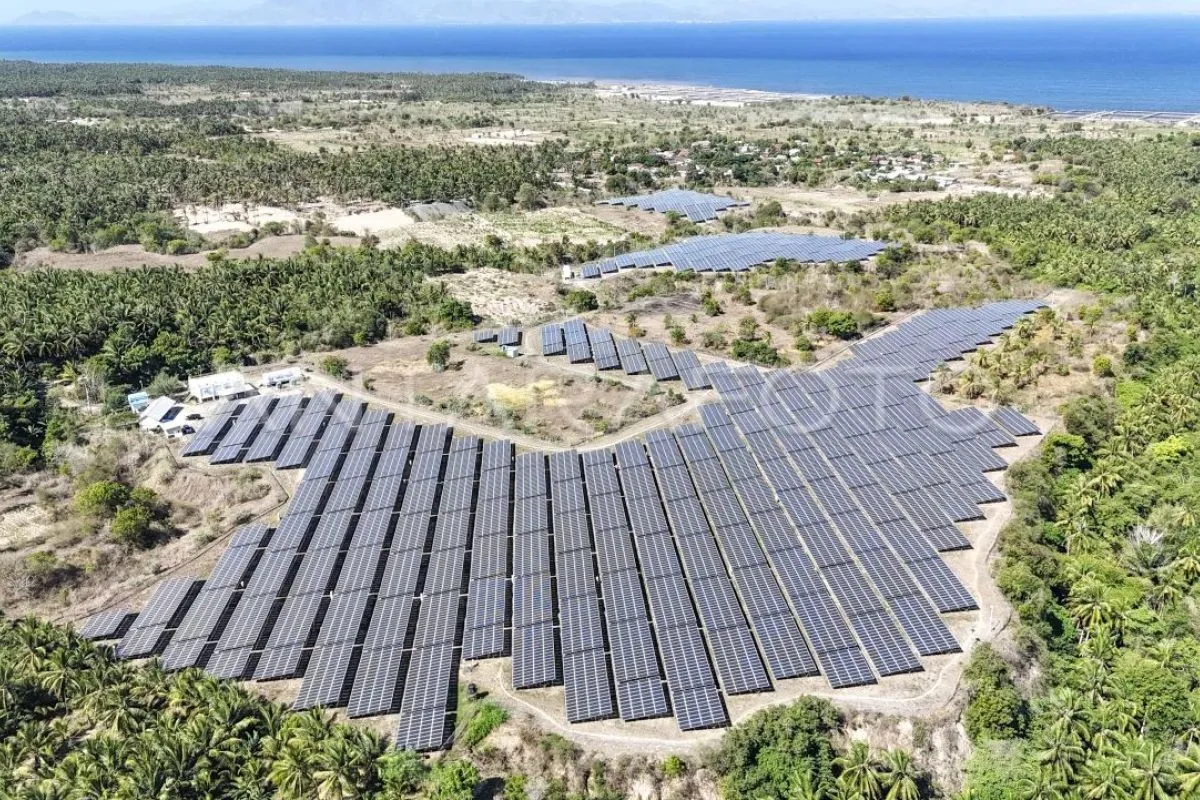
The task force is focused on clean energy goals, including a 100-gigawatt (GW) solar power (PLTS) program, with a primary emphasis on accelerating solar installations in schools and villages.
While Indonesia sits upon a "treasure trove" of solar potential estimated at 3,217 GW, actual utilization remains low.
Consequently, the task force is prioritizing investment in green infrastructure to bridge the gap between this vast potential and national demand.
The government is also accelerating large-scale solar projects in remote areas as part of its effort to ensure equitable access to clean energy.
Other priorities include the conversion to electric vehicles and the expansion of bioenergy, such as biodiesel and bioethanol, to reduce the drain on foreign exchange caused by fossil fuel imports.
Indonesia’s geothermal sector, with a capacity exceeding 2.6 gigawatts, remains the "green emerald" of the nation’s sustainable power grid.
From a security standpoint, Khairul Fahmi, an analyst from the Institute for Security and Strategic Studies (ISSES), has emphasized the critical importance of protecting national infrastructure.
According to his assessment, the security of power grids and government data must be defended with advanced cyber technology, as modern conflict often begins with the paralysis of a nation's vital facilities.
As the global energy landscape remains fraught with peril, Indonesia is attempting to weave together efficiency, diversification, diplomacy, and transition into this unified, measured response.
The "energy storm" from the Middle East is serving as a crucible for the nation’s resilience.
Energy sovereignty has evolved from a political slogan into a tangible result of tactical bravery and systemic reform.
President Prabowo’s decision to pursue this path reaffirms Indonesia’s position as a nation that refuses to be a bystander to global uncertainty.
The synergy between decisive policy and a disciplined citizenry is now the primary fuel for Indonesia’s rise as a self-sufficient global actor.
Through this “National Orchestration”, Jakarta is not merely surviving the crisis—it is redefining the meaning of independence.
Related news: Indonesia secures energy supplies amid Hormuz Strait volatility
Related news: RI Govt says fuel prices stable despite ongoing Mideast conflict
Editor: Rahmad Nasution
Copyright © ANTARA 2026


