Indonesia’s National Research and Innovation Agency (BRIN) has urged the creation of integrated national autism data to strengthen policies, services, and resource planning, citing the absence of comprehensive nationwide surveys.
Rozana Ika Agustiya, a researcher at BRIN’s Research Center for Public Health and Nutrition, said current autism figures remain estimates, limiting effective policy design and targeted interventions.
“If we know the numbers and distribution, we can plan services, workforce, and budgets. Without data, policies risk missing their targets,” she said Thursday.
Agustiya noted that robust data would help map needs across age groups, from early childhood to adolescence, enabling more precise interventions.
Limited data, she added, is linked to broader challenges such as delayed detection, low parental awareness, and a shortage of trained personnel in primary healthcare.
Access to therapy remains uneven, particularly outside major cities. Children with autism require varied interventions, including speech, occupational, and behavioral therapy, but facilities and professionals are not evenly distributed nationwide.
Services are often fragmented, forcing families to navigate multiple providers, adding financial and logistical burdens.
While Indonesia’s national health insurance covers some services, families still face costs for transportation, caregiving, and assistive tools, often requiring one parent to reduce working hours.
Social stigma also persists, with autistic children sometimes labeled “naughty” and parents blamed for poor upbringing.
Agustiya stressed that autism care extends beyond medical services, requiring strong family and community support.
Parents play a key role in continuing therapy at home, she said, underscoring the importance of early detection to improve development and social adaptation.
BRIN, she added, can contribute by supporting national surveys and cross-sector data integration to strengthen evidence-based policymaking.
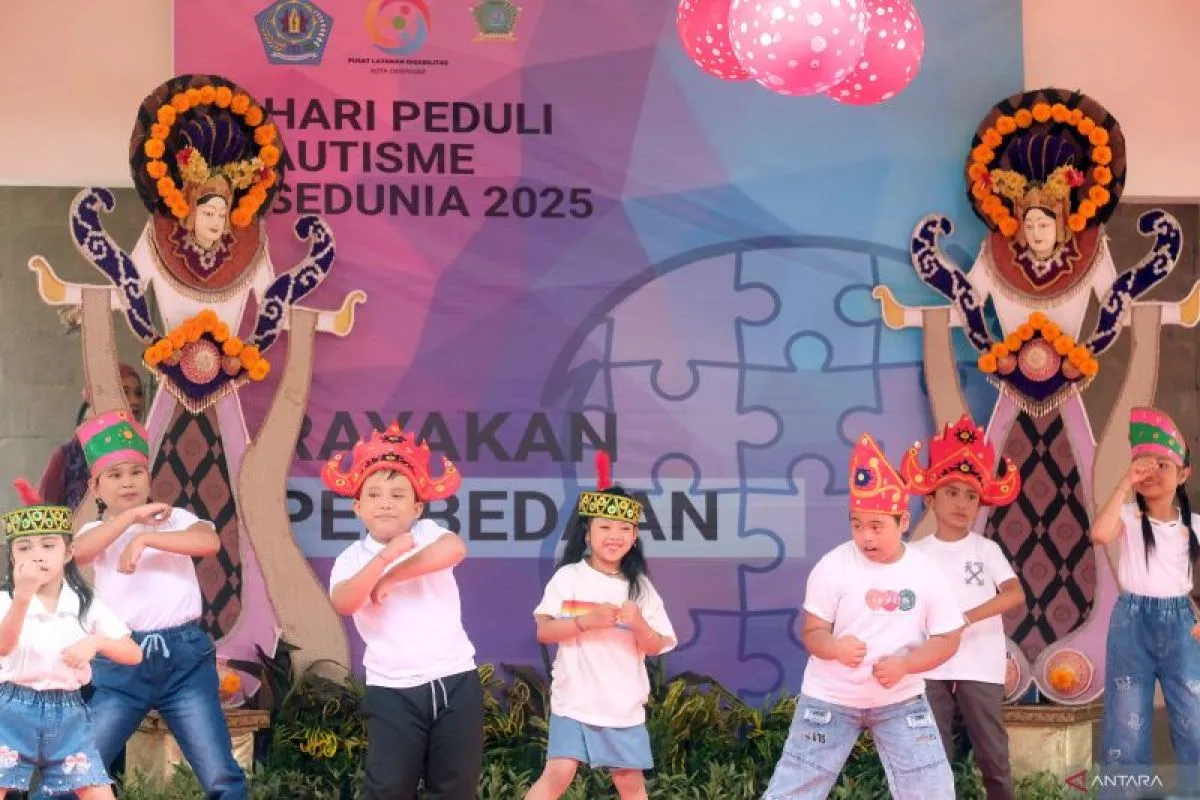
Marking World Autism Awareness Day on April 2, she emphasized the need for a systematic, data-driven approach, noting that each child on the spectrum has unique potential that families should nurture individually.
Related news: BRIN develops technology to clean water with heavy metal contamination
Related news: Indonesian tempeh taps Latin American market via Chile agreement
Translator: Sean Filo Muhamad, Martha Herlinawati Simanjuntak
Editor: Aditya Eko Sigit Wicaksono
Copyright © ANTARA 2026


