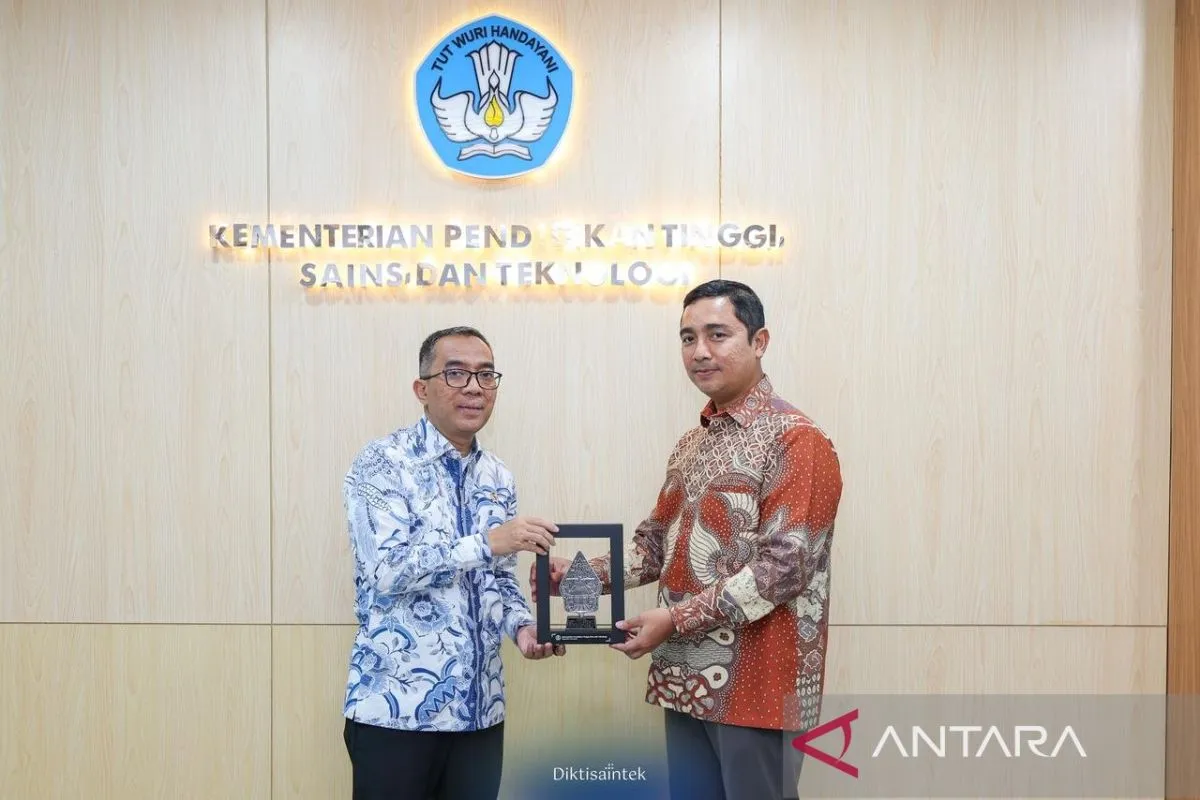
"Let's form a joint consortium involving associations, industry players, and universities. Research support can be strengthened by academia, while the government can allocate the necessary funding to better secure our technological sovereignty," he said in a statement in Jakarta on Thursday.
Yuliarto emphasized the importance of cross-sector collaboration between universities, industry, and the government in developing national satellite technology.
Integrating research and innovation with industrial needs is deemed key to building an independent and sustainable technological ecosystem.
"In certain conditions, communication is highly strategic. We need to reduce our reliance on external parties to ensure the national communication system continues to be reliable and secure," the minister remarked.
Meanwhile, Chairperson of the Indonesian Satellite Association (ASSI) Risdianto asserted that Indonesia's satellite industry is currently transforming from being connectivity-based to solution-based.
The association also emphasized that satellites remain the primary solution for ensuring coverage across Indonesia as an archipelagic nation.
"It used to be based on connectivity, but it has now evolved to be solution-based. Connectivity has become a commodity, so innovation must be driven toward digital services and technology-driven solutions," Risdianto said.
The Ministry of Higher Education, Science, and Technology and ASSI also highlighted the importance of nano-satellite development, which is increasingly relevant to support meeting communication needs, territorial monitoring, and national sovereignty.
In this regard, the technological development needs to be supported by national collaborative efforts, including regulatory support, launch access, and cross-sector collaboration.
Related news: BRIN deploys satellite imagery to speed disaster response in Sumatra
Translator: Sean Filo, Raka Adji
Editor: M Razi Rahman
Copyright © ANTARA 2026


