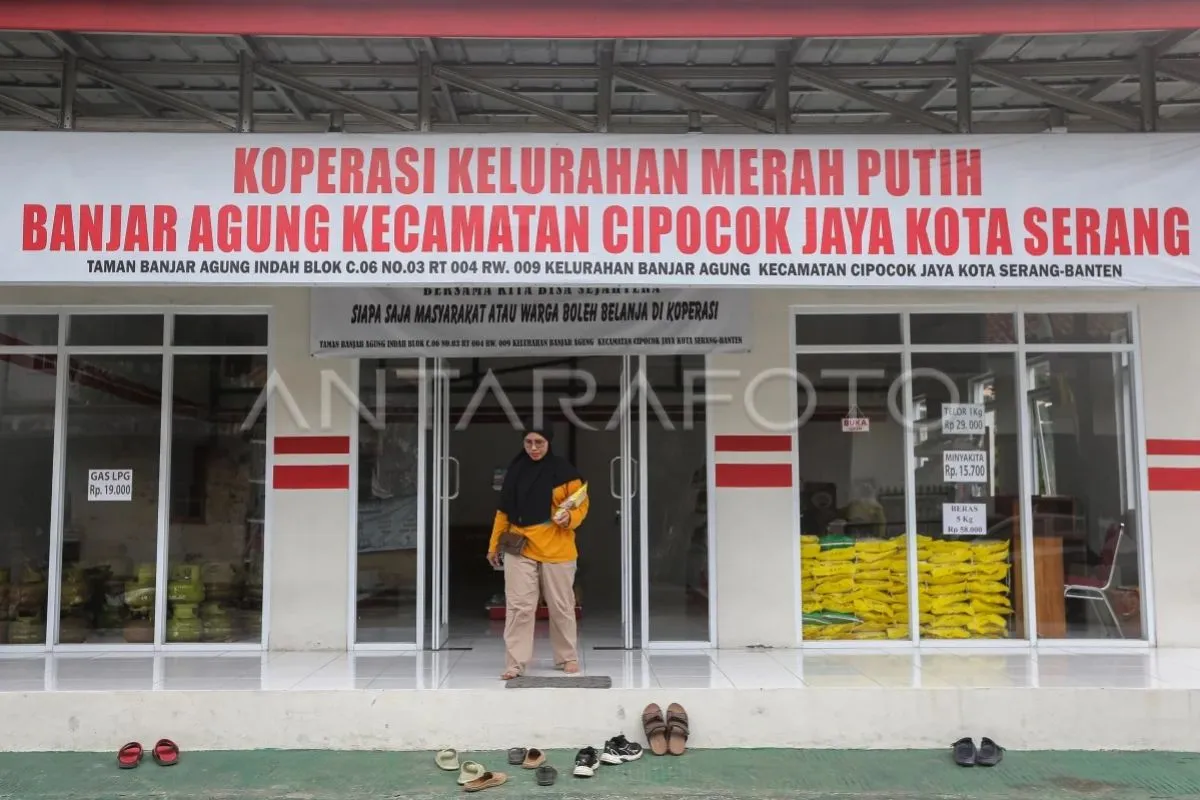
“All local products must be absorbed by cooperatives,” Ahmad Zabadi, secretary at the Ministry of Cooperatives, said in a statement released in Jakarta on Sunday, underscoring the government’s push to anchor economic growth at the village level.
Zabadi said the government-backed Red and White Village Cooperatives are designed to function as aggregators for micro and ultra-micro enterprises, collecting output from small producers and channeling it into wider markets.
He stressed that village cooperatives should form part of a broader industrialization ecosystem, moving beyond simple trading activities to include processing, packaging, and marketing local products using modern production standards.
Such an approach, he said, would create added value for rural communities while improving the competitiveness of village-based goods in domestic markets.
Zabadi added that cooperatives are also expected to encourage local entrepreneurs to scale up production, particularly for daily basic necessities, a move intended to curb dependence on imported consumer goods.
Beyond supporting local producers, village cooperatives are tasked with ensuring public access to subsidized essentials, including liquefied petroleum gas (LPG), rice, and medicines, sold at official government-regulated prices.
He noted that prices of strategic commodities have frequently been distorted by middlemen, weakening purchasing power and undermining government subsidy programs.
Related news: Ministries team up to bolster village co-ops' role as economic drivers
Cooperatives, Zabadi said, are expected to shorten distribution chains and improve price transparency, particularly in rural and remote areas.
He added that cooperatives also serve as intermediaries for fishers and farmers seeking access to subsidized fuel and fertilizers, helping to stabilize production costs in key food sectors.
Zabadi further highlighted the role of Red and White Village Cooperatives in supporting the government’s Free Nutritious Meals (MBG) program by supplying raw materials sourced from local producers.
In this context, village cooperatives are expected to consolidate dairy farmers and other food producers to meet national demand, ensuring locally produced food is prioritized in nutrition programs.
The Ministry of Cooperatives is currently accelerating the construction of cooperative outlets, warehouses, and supporting infrastructure nationwide, with the aim of having the Red and White Village Cooperatives fully operational by next year.
Related news: Villagers should develop superior products: Ministry
Translator: Shofi Ayudiana, Raka Adji
Editor: Rahmad Nasution
Copyright © ANTARA 2025


