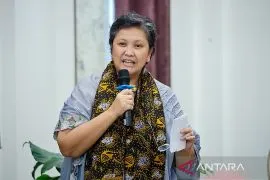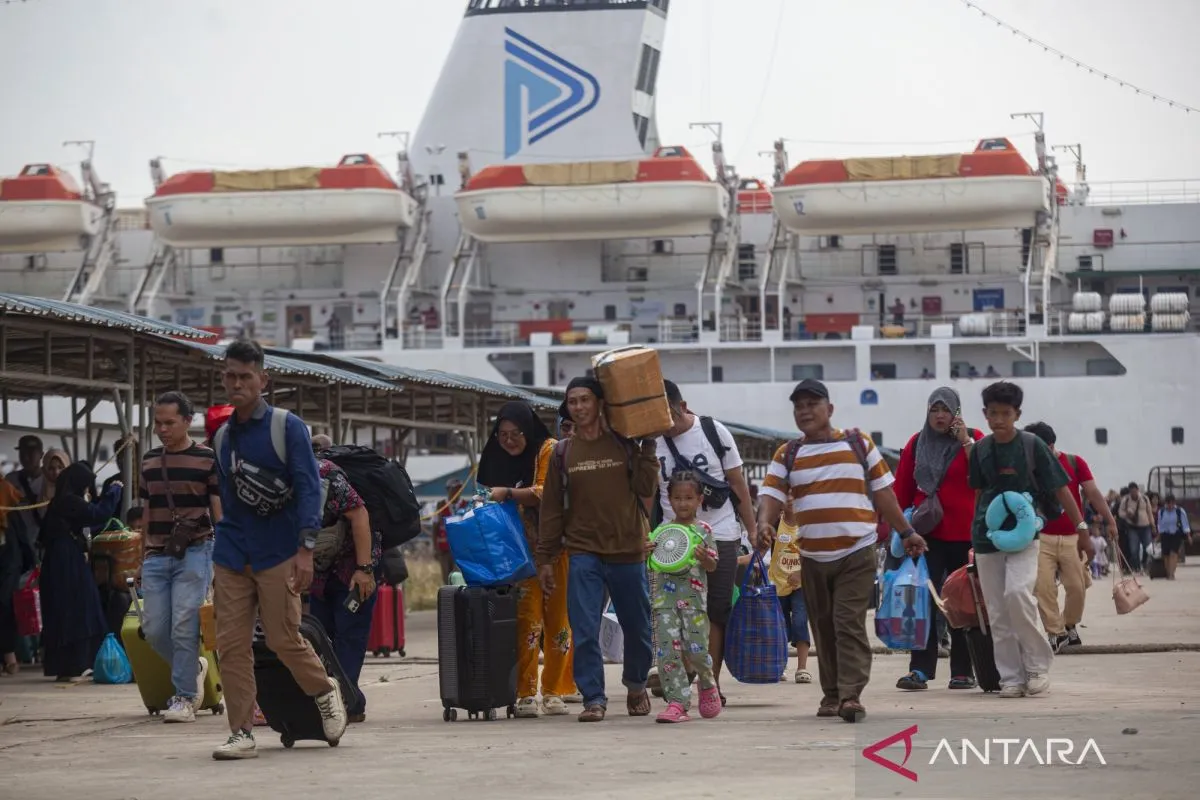
Bonivasius Prasetya Ichtiarto, deputy for population control at the Population and Family Development Ministry (BKKBN), said the stronger return flow compared to outbound travel reflects more than transport trends.
“Big cities attract rural residents seeking jobs and economic progress, but villages lose their young workforce, which should drive local development and sustainability,” he said on Monday.
He added that the impact extends beyond economic inequality to social disparities, ecological balance and environmental sustainability in rural regions.
Bonivasius warned that without intervention, the demographic dividend could turn into a burden, with cities facing infrastructure strain while rural areas experience population aging and persistent unemployment.
Referring to the Population Development Road Map (PJPK), he said labor indicators show the complexity of the challenge. The open unemployment rate declined from 7.73 percent in 2020 to around 4.85 percent in 2025, according to Statistics Indonesia, but disparities remain.
Related news: Indonesia must harness demographic bonus, says minister
Urban unemployment stands at about 5.6 percent, higher than 3.6 percent in rural areas. Of Indonesia’s 154 million workforce, with a labor force participation rate of 70.59 percent in 2025, about 59.12 percent work in the informal sector.
Formal employment opportunities are more concentrated in cities, encouraging large-scale migration from villages.
“Another indicator is that certified skilled workers are still concentrated in urban areas, leaving rural workers less competitive,” he said.
He also highlighted disparities in gross regional domestic product per capita, with Jakarta and East Kalimantan exceeding 300 million rupiah, while many provinces remain below 60 million rupiah.
To turn reverse migration into a development opportunity, Bonivasius urged local governments to implement PJPK-based action plans focused on strengthening local economies, improving workforce quality and managing migration sustainably.
“Villages must be positioned not merely as labor sources, but as centers of economic growth,” he said.
Related news: Indonesia affirms inclusive city commitment at BRICS forum
Translator: Lintang, Kenzu
Editor: Rahmad Nasution
Copyright © ANTARA 2026