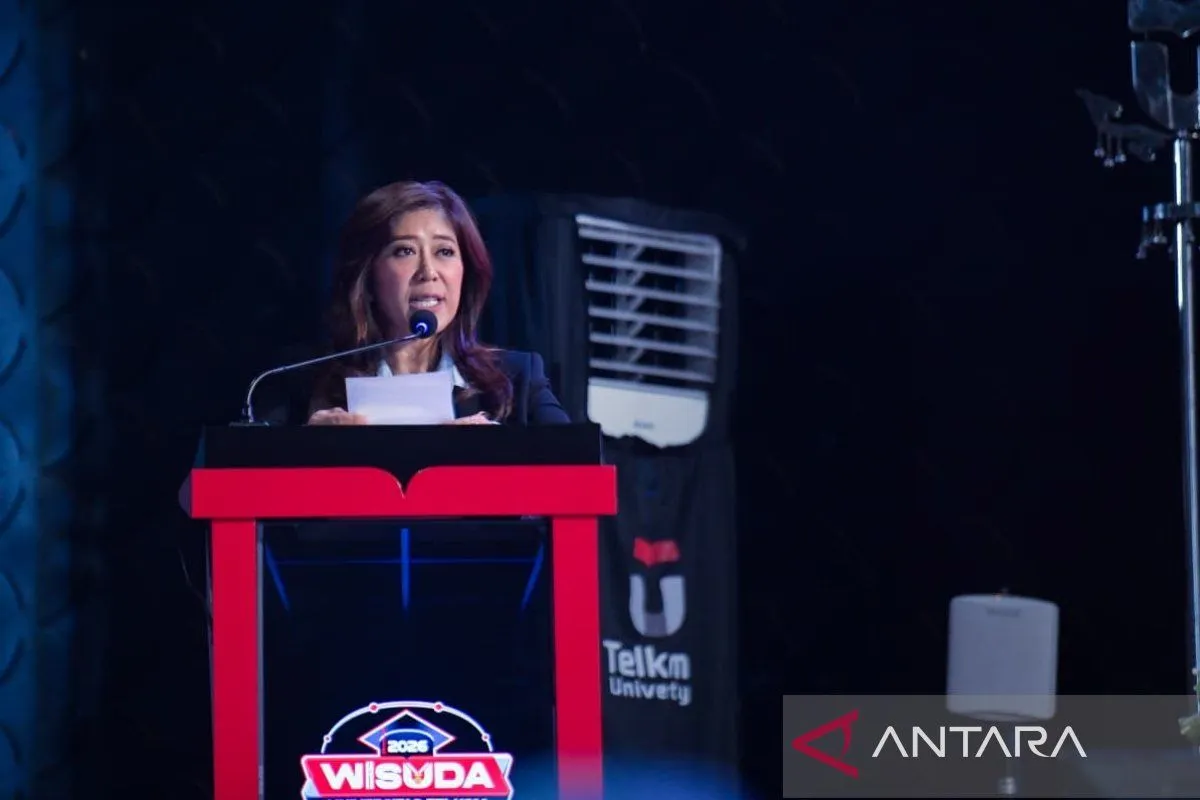
"In the post-truth era, our challenge is no longer access to information, but its quality. Therefore, graduates must also act as agents of change and promote digital literacy in their respective regions," she said.
She made the statement while speaking to graduates of Telkom University in Bandung, West Java, according to a press release issued on Saturday.
The rapid flow of information in the digital era has created challenges, including misinformation, requiring graduates to play an active role in maintaining information quality.
The minister said the government is taking firm steps to reduce exposure to harmful content through adaptive regulations, including Government Regulation No. 17/2025 (PP Tunas), which restricts access to risky digital platforms for children under 16.
"We want graduates to also become 'Tunas ambassadors' who can help the government protect children in the digital space," she said.
She added that widespread technology adoption in Indonesia presents both opportunities and challenges, particularly in strengthening digital literacy and ethical awareness, including in the use of artificial intelligence (AI).
The management of the national digital space, she said, is based on prudence and security, ensuring technology is used with attention to safety, transparency, and human interests.
"We must remain vigilant to ensure AI adoption is accompanied by responsibility, security, ethics, transparency, and a focus on human interests," she said.
Hafid also emphasized the need for collaboration across all sectors, including young people, to address digital-era challenges.
She reminded graduates that their responsibilities extend beyond academic achievement to building a safer, more ethical, and competitive digital space.
Related news: Indonesia to continue school revamp, digital push in 2026
Related news: Indonesia restricts under-16 digital accounts to fight cybercrime
Translator: Natisha Andarningtyas, Katriana
Editor: Anton Santoso
Copyright © ANTARA 2026


