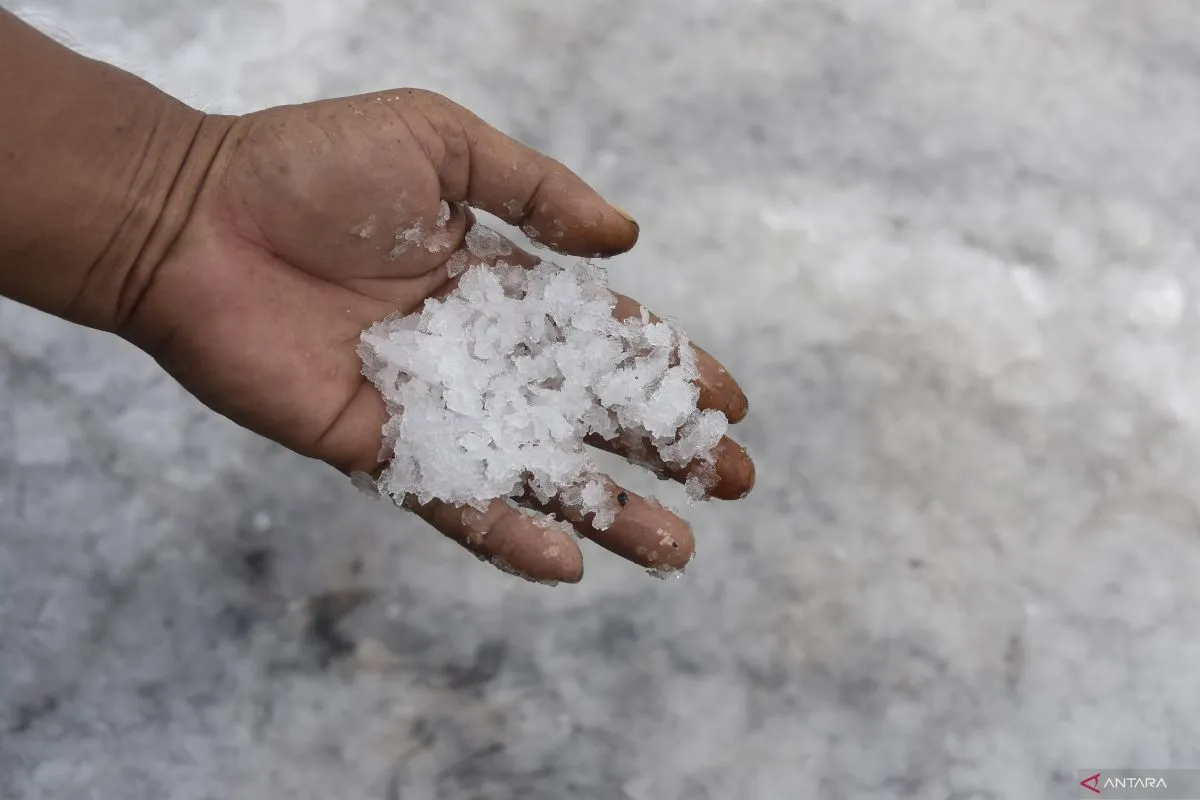
“Our annual salt demand is 5 million tons. We cannot meet that yet, so this project is crucial for meeting domestic salt needs,” Gibran said in a statement on Friday, following an inspection of the industrial site.
In addition to supporting salt self-sufficiency, the Vice President emphasized the importance of accelerating the project's development to bring economic benefits to the local community.
"We want this project to be operational as soon as possible. We want to create as many jobs as possible, help local residents, improve their welfare, and most importantly, ensure the multiplier effect of this project,” he noted.
Beyond salt production, Gibran also explored the potential for developing seaweed cultivation and fishing villages in Rote Ndao.
Responding to a proposal from the local government, he assured that the resources needed to support fishing activities would be followed up with the relevant ministries.
Rote Ndao Regent Paulus Henuk expressed his hope that this strategic project would provide direct benefits to the community, especially those affected by the development of the salt farm area.
The government is pushing for the completion of the Rote Ndao salt industry facility by June of this year.
The massive project spans over 10,000 hectares, targets an annual production of 2.6 million tons, and is expected to create more than 26,000 local jobs.
Translator: Kornelis Kaha, Yashinta Difa
Editor: Aditya Eko Sigit Wicaksono
Copyright © ANTARA 2026


