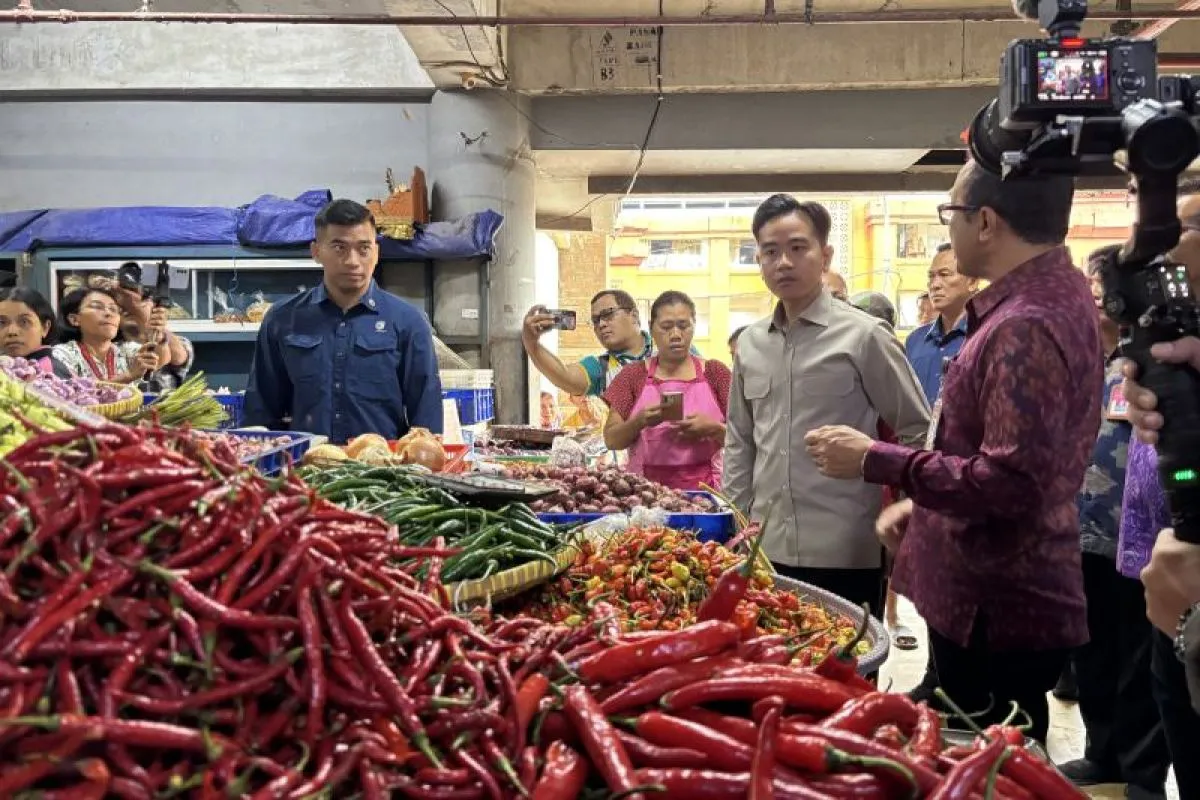
A spice vendor at Badung Market, Era, said non-cash payments have greatly helped her conduct transactions.
“It’s convenient. We don’t have to prepare cash, and it also helps reduce counterfeit money. Sometimes with cash, we don’t know — it could be fake,” she said.
A shopper, Diana, added that she often uses delivery services offered by vendors at Badung Market and pays via interbank transfers.
“It’s very convenient for us housewives; we don’t have to leave the house,” Diana said.
In addition to overseeing the digitalization process, Gibran also supported efforts to maintain the stability of staple commodity prices, including by providing subsidies to vendors.
The visit reflected the government’s commitment to protecting people’s purchasing power and strengthening the trade ecosystem to make it more efficient and modern.
It also underscored efforts to accelerate digital transformation in the trade sector, ensuring that modernization directly benefits micro, small, and medium enterprises (MSMEs) in the regions.
Efforts to maintain price stability align with President Prabowo Subianto’s directive to strengthen the people’s economy through policies that are responsive and based on real needs on the ground.
Gibran emphasized the government’s commitment to ensuring traditional markets remain healthy and stable economic spaces that support small business actors and consumers.
Moreover, he stressed the importance of anticipatory measures in the event of price spikes, including ensuring smooth distribution and targeted policy support for vendors.
Related news: Indonesia builds digital infrastructure to boost economy
Related news: RI speeds up OECD accession, prioritizes environment, digital economy
Related news: Bank Indonesia pushes payment system reforms to boost digital economy
Translator: Muliantari, Kenzu
Editor: M Razi Rahman
Copyright © ANTARA 2026


