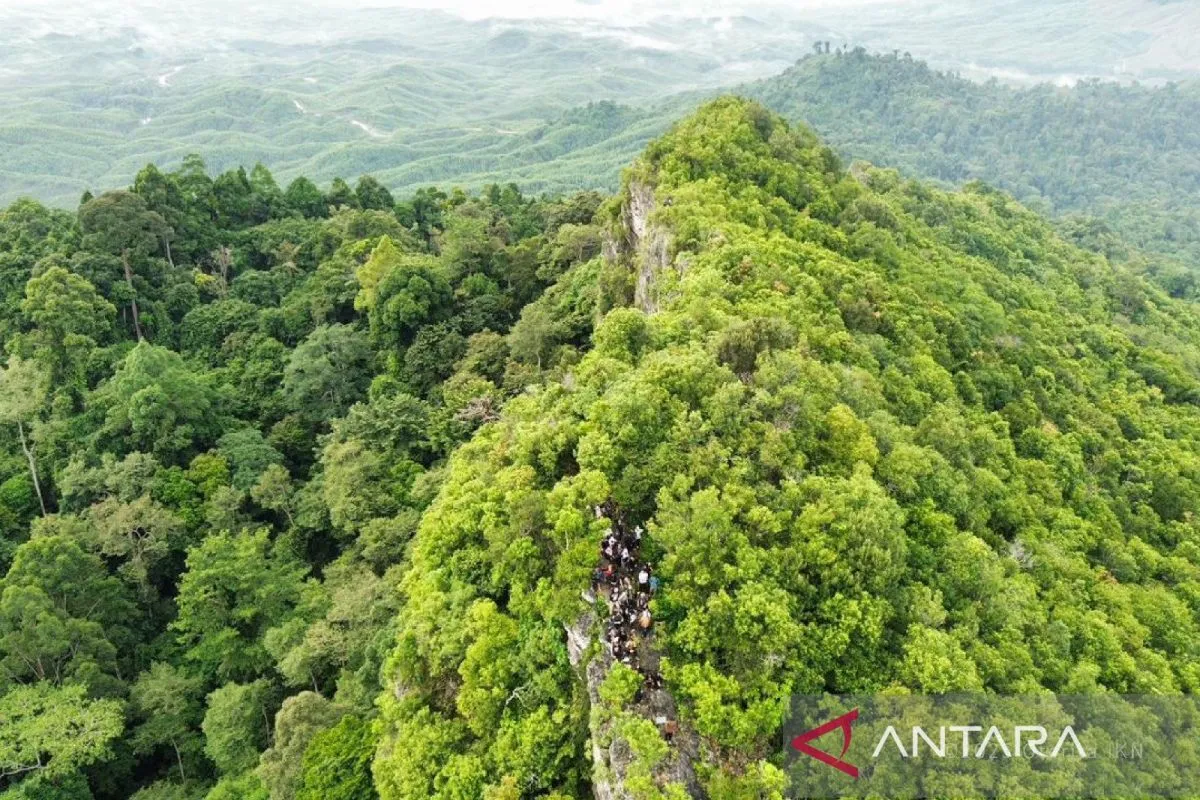
“The IKN continues to provide space for wildlife protection,” said Edgar Diponegoro, an official of the IKN Authority, on Friday when asked about development and environmental aspects of the project in Sepaku sub-district.
The project allocates specific zones for wildlife, including a corridor bridge built above the toll road. Edgar said the bridge reflects the IKN development approach, which prioritizes wildlife protection within the area.
He explained that the corridor allows animals to move and live safely without disruption. The wildlife corridor functions as a dedicated passage, enabling fauna to cross the IKN Toll Road without interference.
The IKN Authority’s commitment to realizing a forest city concept in Indonesia’s new capital is reflected in its policy to safeguard wildlife habitats. Under the legal mandate, built-up areas must not exceed 25 percent of the total area, while approximately 65 percent will remain forested.
“Rebuilding Kalimantan’s endemic forests with native plant and animal species will help create a microclimate,” said Onesimus Patiung, another official of the IKN Authority.
He noted that restoring tropical forests to their original condition is challenging, as much of the germplasm, or genetic material of plants and animals, has been lost due to illegal logging, land clearing, and forest fires.
Construction of a germplasm center and museum to document remaining biodiversity is underway at the Mentawir Nursery in Sepaku sub-district.
Kalimantan is dominated by tropical forests with diverse and distinctive ecosystems. Its forests are characterized by endemic plant species not found elsewhere. The region also has heath forests in coastal areas and sandy soils that are low in nutrients, Patiung said.
Related news: IKN Authority balances development, environmental sustainability
Related news: Indonesia strengthens controls against illegal activities in Nusantara
Translator: Nyaman Bagus Purwaniawan, Cindy Frishanti Octavia
Editor: Primayanti
Copyright © ANTARA 2026


