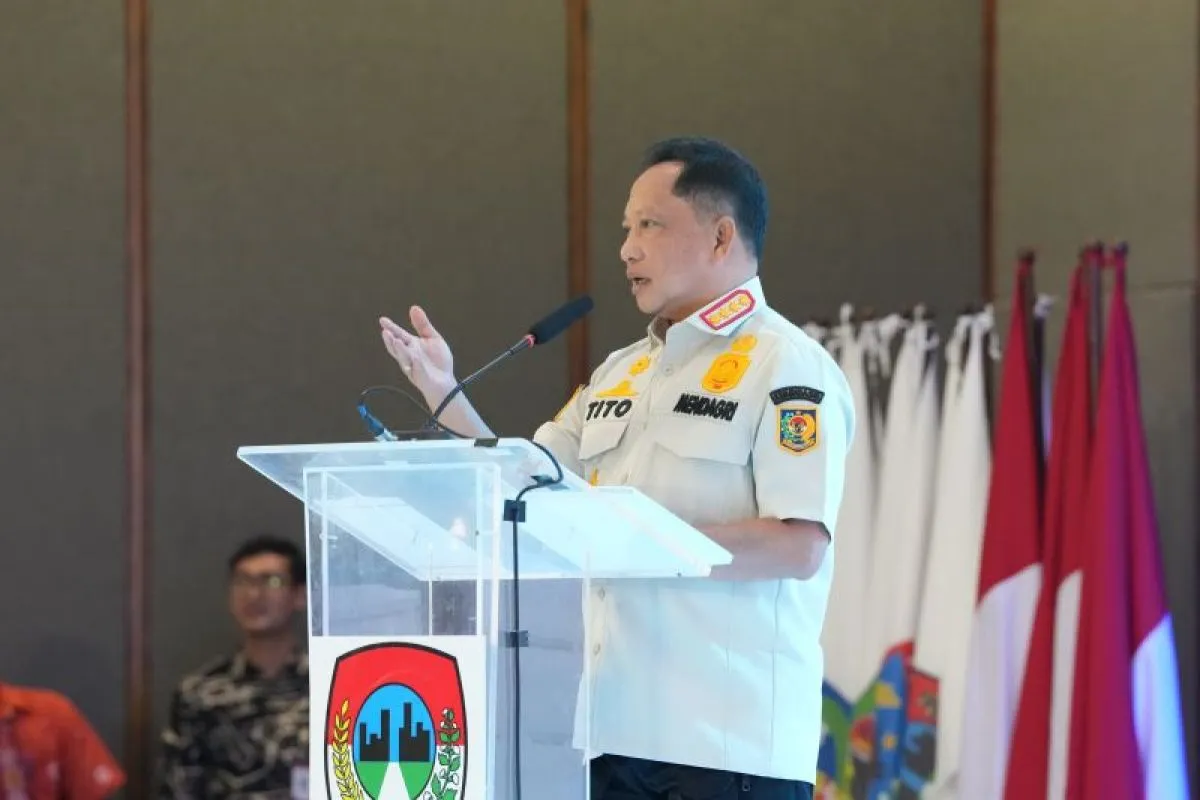
“More than 60 percent of our people are concerned about the cost of living, especially food prices,” Home Affairs Minister Tito Karnavian said in a statement.
He made the remarks while delivering a keynote address at a meeting of the Association of Indonesian City Governments (APEKSI) in Banda Aceh.
Karnavian said inflation has moved beyond a macroeconomic concern and is now directly affecting daily life, particularly through higher food, energy and logistics costs.
He warned that unchecked price increases could trigger broader social pressure, including potential unrest, if not addressed early.
The minister pointed to ongoing global uncertainties, including the Russia-Ukraine conflict and tensions in the Middle East, as key drivers of volatility.
“These dynamics are affecting global energy prices, which then ripple across multiple sectors,” he said.
Higher oil prices, he added, can push up transportation and distribution costs, ultimately raising the price of goods.
Karnavian stressed that regional governments play a crucial role in maintaining price stability and must act proactively.
“Do not run on autopilot. Do not wait until problems escalate,” he said.
He called on Regional Inflation Control Teams (TPID) to strengthen coordination, including working closely with Statistics Indonesia (BPS) to track price movements in real time.
He said inflation control should focus on ensuring adequate supply and smooth distribution of essential goods.
Drawing lessons from the COVID-19 pandemic, Karnavian underscored the importance of strengthening local food resilience.
He pointed to initiatives such as urban farming, hydroponics and the use of small urban land plots as practical solutions.
“These efforts are not only adaptive but also create opportunities for community empowerment,” he said.
The government expects stronger coordination between central and local authorities to help cushion the impact of global shocks on households.
Officials say early intervention will be key to maintaining stability and protecting vulnerable groups from rising economic pressures.
Related news: Indonesia absorbs fuel price hikes as tensions rise
Related news: Gov't provides up-to-down fiscal incentives to sustain tourism
Translator: Fianda, Kenzu
Editor: Rahmad Nasution
Copyright © ANTARA 2026


