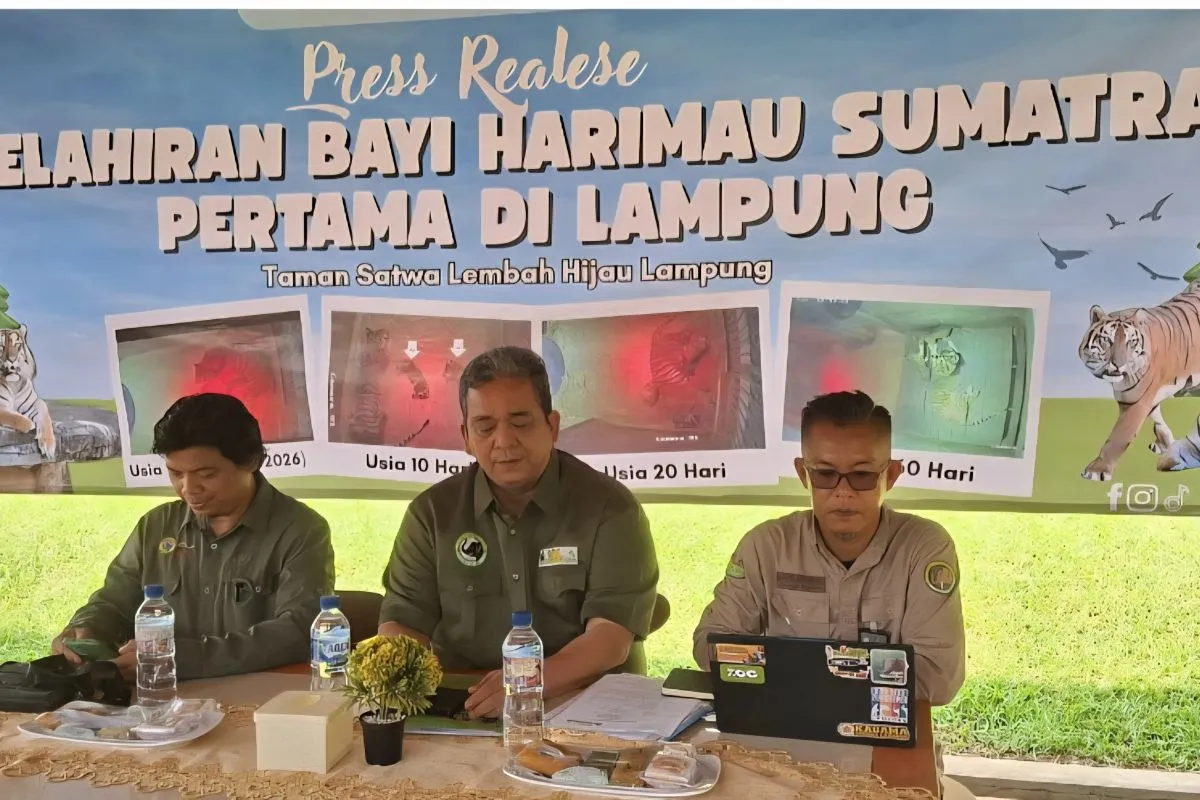
Lembah Hijau Conservation Institution commissioner M. Irwan Nasution said in Bandar Lampung on Monday the cubs were born on Feb. 14, 2026, marking the first ex situ birth in the province.
"This birth is deeply meaningful for us. The cubs were born to Kyai Batua and Sinta, both victims of poaching snares who now suffer permanent physical disabilities," Irwan said.
Related news: Young Sumatran tiger captured near village in Indonesia
Kyai Batua, the male parent, was rescued by Bengkulu-Lampung Natural Resources Conservation Agency on July 2, 2019, after being found trapped in Batu Ampar Village, Suoh Subdistict, West Lampung District.
Due to severe injuries, veterinarians amputated his front right leg to save his life, leaving him unable to return to the wild.
Meanwhile, the female parent, Sinta, suffered a similar fate after being caught in a snare in Bengkulu on December 2024, which resulted in the loss of her rear right leg.
Sinta was later transferred to Lembah Hijau for treatment and rehabilitation, where she was paired with Kyai Batua, under a managed conservation breeding program.
Related news: Sumatran tiger mauls farmer in Lampung's national park
Irwan said the pairing was part of the Forestry Ministry’s Global Species Management Plan (GSMP) phases III and IV for 2024–2025.
The program is implemented in coordination with the Indonesian Zoo Association through controlled breeding recommendations to ensure genetic sustainability.
According to the conservation records, Kyai Batua is listed in the Sumatran Tiger Studbook under ID 1886, while Sinta is registered under ID 1998.
Irwan added the success shows physical limitations caused by human-wildlife conflict do not prevent animals from contributing to species survival if managed under proper conservation standards.
Related news: Tiger cub rescued in West Sumatra after being trapped in snare
Management credited the achievement to collaboration among rescue teams, veterinarians, paramedics, Bukit Barisan Selatan National Park authorities, and the Bengkulu-Lampung conservation agency.
To ensure the animals’ welfare, specially designed enclosures have been built to mimic natural habitat conditions and support the cubs’ optimal growth and development.
Beyond boosting the endangered species’ population, the birth is expected to raise public awareness about the dangers of snare traps and the importance of wildlife protection.
Related news: Endangered Sumatran tiger tracks found after close encounter in Riau
Translator: Agus WS, Rahmad Nasution
Editor: Fransiska Ninditya
Copyright © ANTARA 2026


