This partnership aims to strengthen national food self sufficiency while improving Indonesia's strategic position as the world's leading producer.
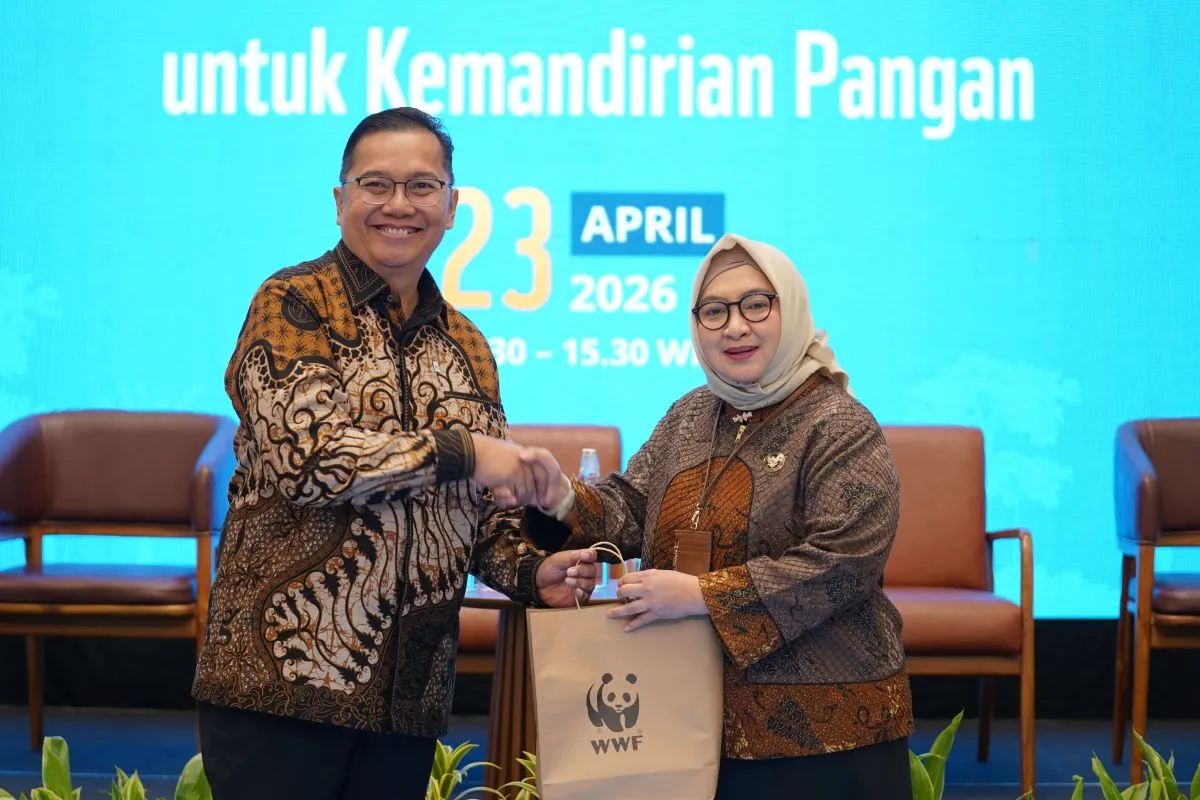
The push was highlighted during the 2026 National Food Self Sufficiency Dialogue in Jakarta on Thursday which brought together cross sector stakeholders o formulate concrete steps for improving palm oil governance.
"Strengthening inclusive, transparent, and accountable governance is key to maintaining global competitiveness while ensuring the welfare of smallholders and national food security," the ministry's Deputy for Food and Agricultural Business Coordination, Widiastuti, said in a statement in Jakarta on Friday.
She explained that the transformation of the palm oil sector must focus on increasing productivity by optimizing existing land, strengthening the role of independent smallholders, and implementing national sustainability standards.
Widiastuti noted that there are still hindrances to increasing smallholders' productivity, such as those related to land legality, access to superior seeds and fertilizer, and financing limitations.
“We have the resources and the scale; what we need now is inclusive governance and a system capable of meeting global standards without sacrificing smallholders,” she remarked.
Meanwhile WWF Indonesia CEO Aditya Bayunanda emphasized the importance of balancing increased palm oil production with environmental conservation.
“Through proper guidance and intensification for independent smallholders, we can boost productivity without the need for further land clearing,” he said.
According to him, this approach is key to curbing environmental degradation while preserving biodiversity across the archipelago.
He underscored that strengthening farmer capacity and implementing better cultivation practices will enhance the competitiveness of Indonesian palm oil.
Bayunanda pointed out that Indonesia currently accounts for around 58 percent of global palm oil production.
Crude palm oil production volumes reached between 46 and 51.6 million tons during the 2024 to 2025 period.
The output comes from 16.83 million hectares of plantations with approximately 40 percent managed by independent smallholders.
These smallholders still face various challenges regarding productivity and require sustained support to meet national sustainability standards.
Related news: Circular model seen boosting Indonesia's palm oil industry
Related news: Indonesia pushes cattle-palm integration to cut feed costs
Translator: Aria Ananda, Raka Adji
Editor: Arie Novarina
Copyright © ANTARA 2026


