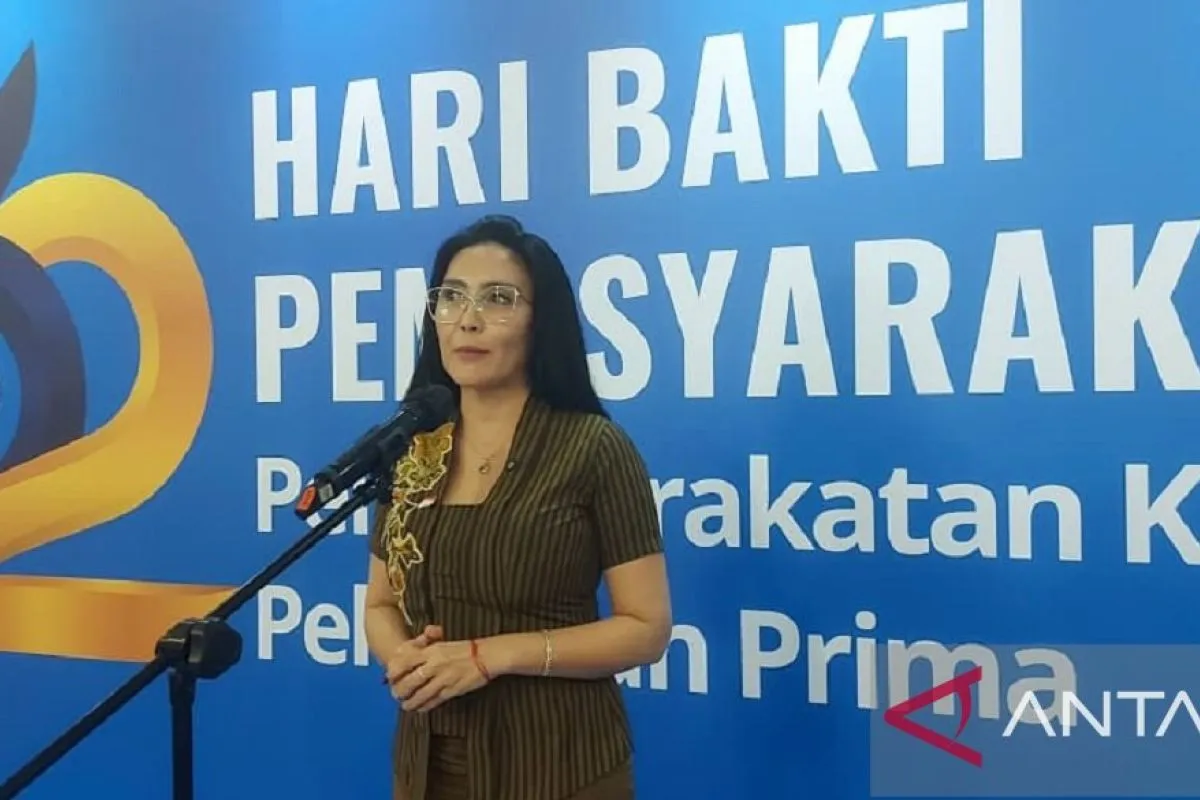
The focus is on drafting government regulations for post-conviction handling of narcotics crimes, with rehabilitation as the main priority,Tangerang, Banten (ANTARA) - Indonesian lawmaker Rieke Diah Pitaloka emphasized the importance of a post-conviction rehabilitation approach for drug offenders, as a comprehensive solution to address overcrowding in prisons.
According to member of Commission XIII of the Indonesian House of Representatives (DPR RI), more than half of prison inmates in Indonesia are drug-related offenders.
"The issue of drug trafficking within prisons cannot be viewed simply. This is part of a collective evaluation and self-criticism, considering that more than 52 percent of prison inmates are drug offenders," Rieke said following a gathering for the 62nd Correctional Service Day at the Tangerang Immigration and Correctional Polytechnic Campus on Monday.
She noted that of the 270,000 prison inmates, approximately 140,000 are involved in drug offenses, with around 60 percent classified as dealers.
To address this, she said the DPR is pushing for new regulations that integrate the corrections law, the narcotics law, and the 2023 and 2025 Criminal Codes (KUHP), particularly in terms of post-conviction handling of narcotics crimes.
Rieke stressed that the shift in Indonesia’s criminal law—no longer centered solely on imprisonment—must be supported by policies that prioritize rehabilitation with clear classifications.
“The focus is on drafting government regulations for post-conviction handling of narcotics crimes, with rehabilitation as the main priority,” she said.
She argued that prison overcapacity in Indonesia is largely driven by the absence of a specific framework for handling narcotics offenders after conviction. Going forward, this mechanism is expected to be regulated more comprehensively through policies currently being developed.
Furthermore, the DPR is encouraging the integration of the correctional system with regional government systems through a decentralized approach.
Collaboration with the Ministry of Home Affairs is essential to ensure that correctional institutions become part of the Regional Leadership Coordination Forum, she added.
Such integration is expected to improve prisoner management, including the rehabilitation of drug offenders, by involving local governments more actively.
“This step is expected to promote better, more humane, and sustainable correctional management,” Rieke concluded.
Related news: Bali to open largest women's prison in 2026 to ease overcrowding
Related news: Ministry to tackle overcrowding in prisons after inmate escape
Related news: Govt building 1,500-capacity prison to ease overcrowding
Translator: Achmad Irfan, Yashinta Difa
Editor: M Razi Rahman
Copyright © ANTARA 2026


