He believes that spiritual values are an inseparable part of Indonesian society including within the national healthcare system.
This approach is in line with the first principle of Pancasila, belief in the One Almighty God, which reflects the identity of Indonesia as a religious nation.
"When someone is sick, what do they need most besides medicine and medical treatment? The answer is a sense of calm, a sense of respect, and the assurance that they are being cared for in line with their values," said the deputy minister on Friday.
"For Indonesians, this is not just an added convenience, but a fundamental spiritual need," he added.
With a Muslim population reaching 87 percent, Indonesia has great potential to become a leading destination for halal healthcare services for both domestic and international patients.
"This potential demands our readiness to provide holistic sharia health care services," he said.
He stated that sharia hospitals exist not only to prioritize medical and technological aspects, but also to provide holistic, humane, and equitable services as part of the transformation of the national health system.
The deputy minister also praised the development of sharia compliant hospitals and noted that 24 facilities have received sharia certification across Java, Sumatra, and Kalimantan.
"This achievement demonstrates our real commitment to integrating religious principles into every aspect of health care," he said.
Besides strengthening hospitals he highlighted the importance of supporting the halal product ecosystem where approximately 44,000 pharmaceutical products will be halal certified by 2026.
The Ministry of Health continues to strengthen collaboration with the Halal Product Guarantee Agency (BPJPH), the National Committee for Sharia Economics and Finance (KNEKS), as well as the pharmaceutical industry to support these achievements.
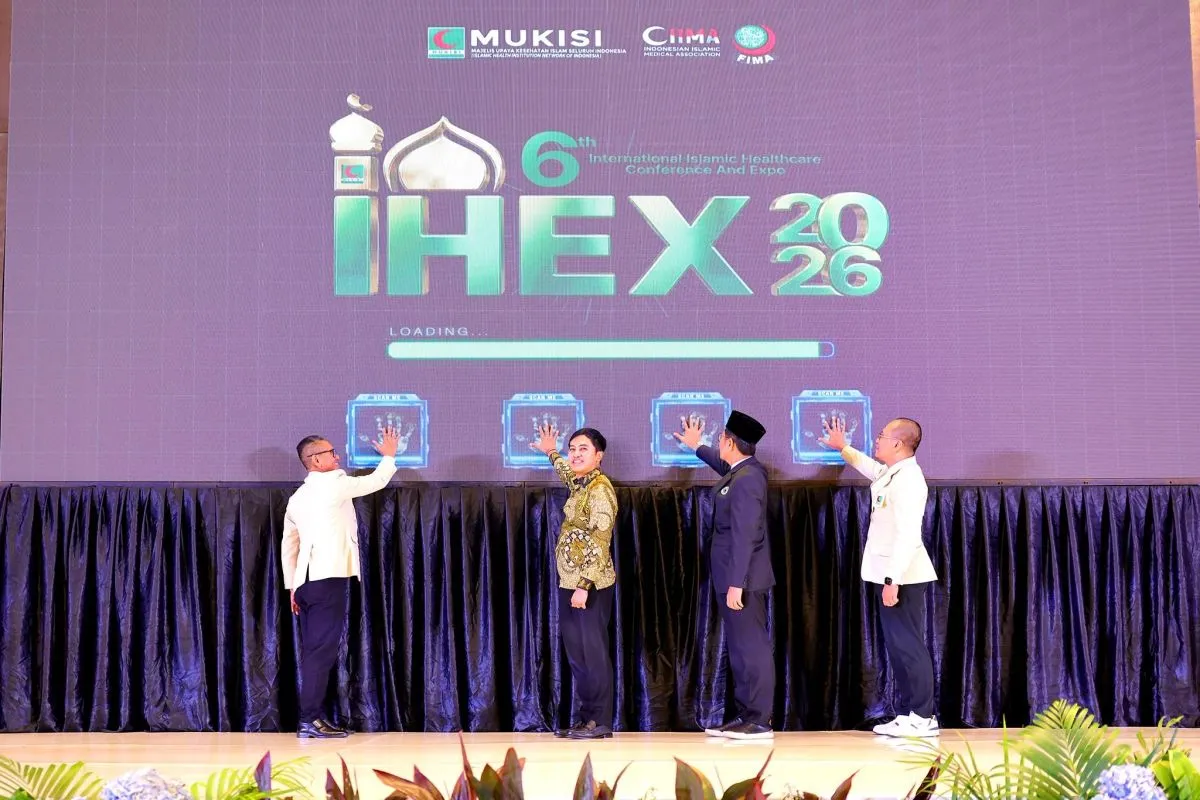
He stated that the 6th International Islamic Health care Conference and Expo, organized by the Indonesian Islamic Health Care Council (MUKISI), with the theme "From Certification to Collaboration," is an important momentum to strengthen cross-sector synergy in building a national sharia health care ecosystem.
"Certification is the foundation, but collaboration is the driving force. We need an integrated ecosystem from upstream to downstream to make Indonesia a global hub for halal health tourism, both medically superior and spiritually soothing," he said.
The Deputy Minister of Health hopes the forum will produce concrete commitments that can be immediately implemented to support the achievement of a more holistic, inclusive, and dignified Indonesian health system.
On the same occasion, Chairman of the Board of Directors of the National Sharia Council of the Indonesian Ulema Council (DSN-MUI) KH Cholil Nafis emphasized sharia certification in the health sector is universal and can be applied in all hospitals, both government and private.
"We have conveyed to the Minister of Health that this sharia certification is not only intended for Islamic hospitals, but is also open to both government and private hospitals," he said.
He noted that Islamic hospitals have provided service standards based on Islamic values such as cleanliness and an Islamic financial system that benefits the entire community.
He stated that all aspects of healthcare services need to meet halal principles including medicines and medical devices as well as injection materials.
In addition he concluded that health services must always prioritize patient comfort and peace of mind.
Related news: Indonesia expands inclusive sharia certification for hospitals
Related news: Indonesia's halal agency targets 2026 industry surge
Translator: Mecca Yumna Ning Prisie, Katriana
Editor: Arie Novarina
Copyright © ANTARA 2026


