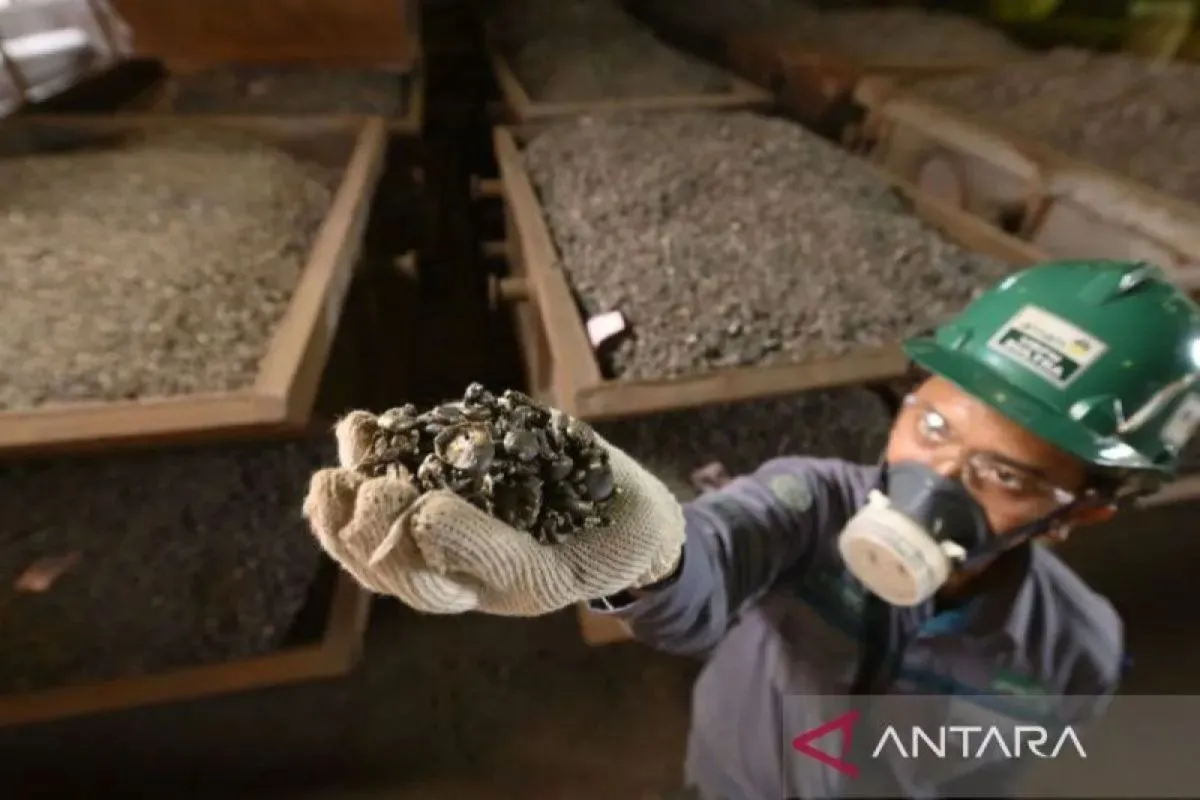
This will become an inseparable axis of nickel reserves and production for the world,Jakarta (ANTARA) - Indonesia and the Philippines have signed a landmark agreement to establish a "Nickel Corridor," integrating their massive resources to secure global supply chains for electric vehicle batteries and stainless steel production.
The Memorandum of Understanding was signed on Thursday in Cebu between the Indonesian Nickel Miners Association and the Philippine Nickel Industry Association.
This partnership creates a formidable trade bloc, as 2026 USGS data shows these two nations controlled a combined 73.6 percent of global nickel production in 2025.
Indonesian Coordinating Minister for Economic Affairs Airlangga Hartarto, who witnessed the signing, emphasized that this is not a standard business deal.
“This is the foundation for the Indonesia-Philippines Nickel Corridor, a structured platform connecting Indonesia's downstream smelter strength with the upstream ore supply from the Philippines,” Airlangga said in a statement, Friday.
The collaboration addresses a critical technical and logistical need for Indonesia’s massive smelting industry.
To produce high-quality battery materials, Indonesian smelters require specific ore blends that the Philippines can provide through precise silicon-to-magnesium ratios.
Under this agreement, Indonesia leverages its status as the holder of 44.5 percent of world reserves, while the Philippines secures a role in a high-value regional chain.
“The Philippines will no longer only be an exporter of raw ore. It will be integrated into a higher regional value chain, while Indonesia gains feedstock security for our battery and stainless steel industries,” Airlangga noted.
Beyond industrial output, the corridor is a play for energy sovereignty. Nickel is a critical mineral essential for the global energy transition, specifically for electric vehicle batteries and solar energy storage.
The partnership includes the exchange of information to stabilize global prices and the development of sustainable technologies for processing industrial side products.
The government targets US$47.36 billion in investment and the creation of 180,600 jobs by 2030. To accelerate this, Indonesia is promoting Special Economic Zones (SEZs) as hubs for international-standard battery innovation. Airlangga concluded by highlighting the global impact of this regional axis.
“This will become an inseparable axis of nickel reserves and production for the world,” he said.
This alliance cements an already robust trade relationship. In 2025, Indonesian exports to the Philippines hit US$10.22 billion, making Indonesia the Philippines' third-largest trading partner after China and Japan.
Related news: Prabowo orders resource push to secure energy autonomy
Related news: Indonesia to impose export duties, windfall tax on coal, nickel
Translator: Bayu Saputra, Aditya Eko Sigit Wicaksono
Editor: M Razi Rahman
Copyright © ANTARA 2026


