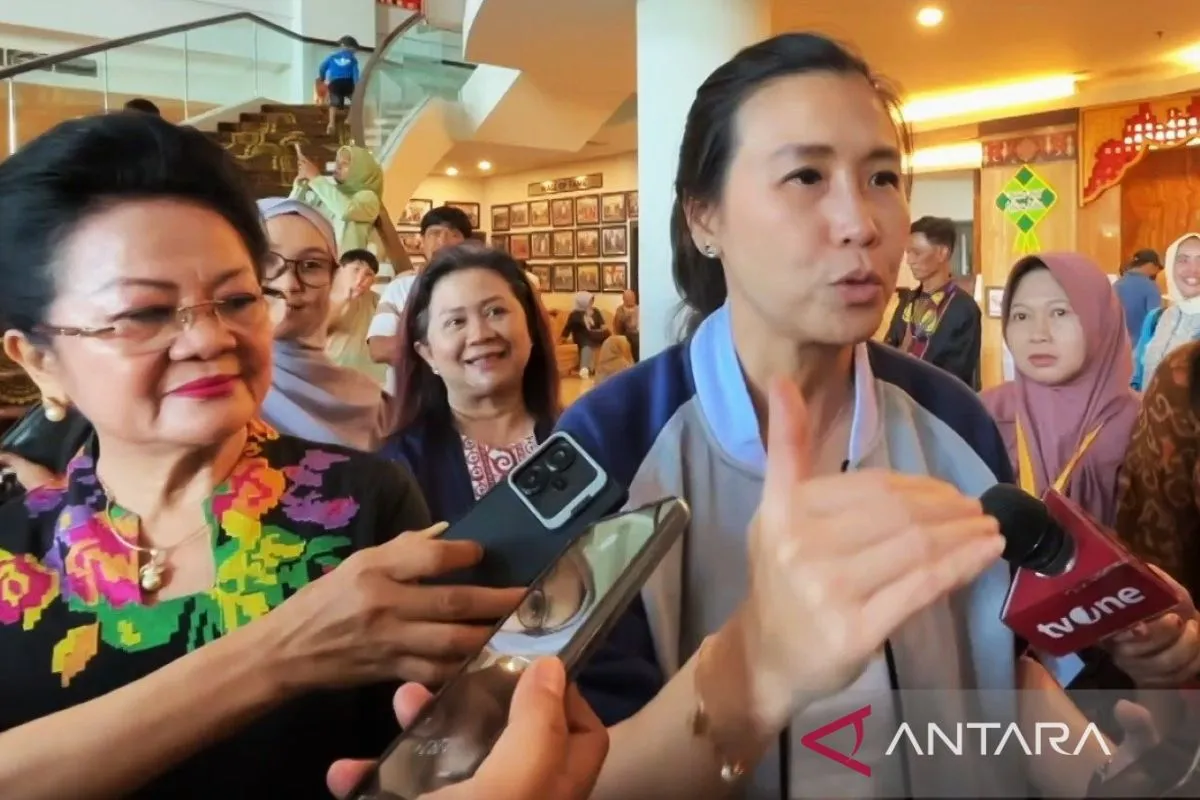
"We hope integrated protection for women and children starts from the village. This is what we are pursuing through deliberations, how ministerial programs originating from the deliberations are truly from women's perspectives," she said here on Friday.
Speaking about integrated services for child protection, she said these should not be limited to the district/city level, but should also be present at the village level.
"When a case occurs, people rush to the PPPA service units. Village heads should have the perspective that families and women must be included as subjects," she said.
Many women are now the backbone of their families, so their data needs to be accurately recorded to ensure the programs are inclusive and aimed at improving their economy and reducing stunting.
"That is why the PPPA Ministry wants to collaborate through women-run community food gardens, aligned with the President's food self-sufficiency program," she said.
In addition, she highlighted how such community gardens can be integrated with local poultry farming. The program focuses on permaculture, a system of agricultural design based on patterns and characteristics of natural ecosystems.
"It does not damage nature or the environment. We can grow local vegetables on the available land, and the existence of livestock and fish helps restore the ecosystem through zero waste," she said.
Tan added that feed and water from fish ponds can be recycled into fertilizer, creating a cycle that serves as a community garden platform while also educating families.
Related news: KPAI urges govt to enforce child online safety rules
Related news: Minister spotlights families' key role in protecting children online
Related news: Minister Hafid explains social media age limit policy to students
Translator: Fatir, Kenzu
Editor: Azis Kurmala
Copyright © ANTARA 2026


