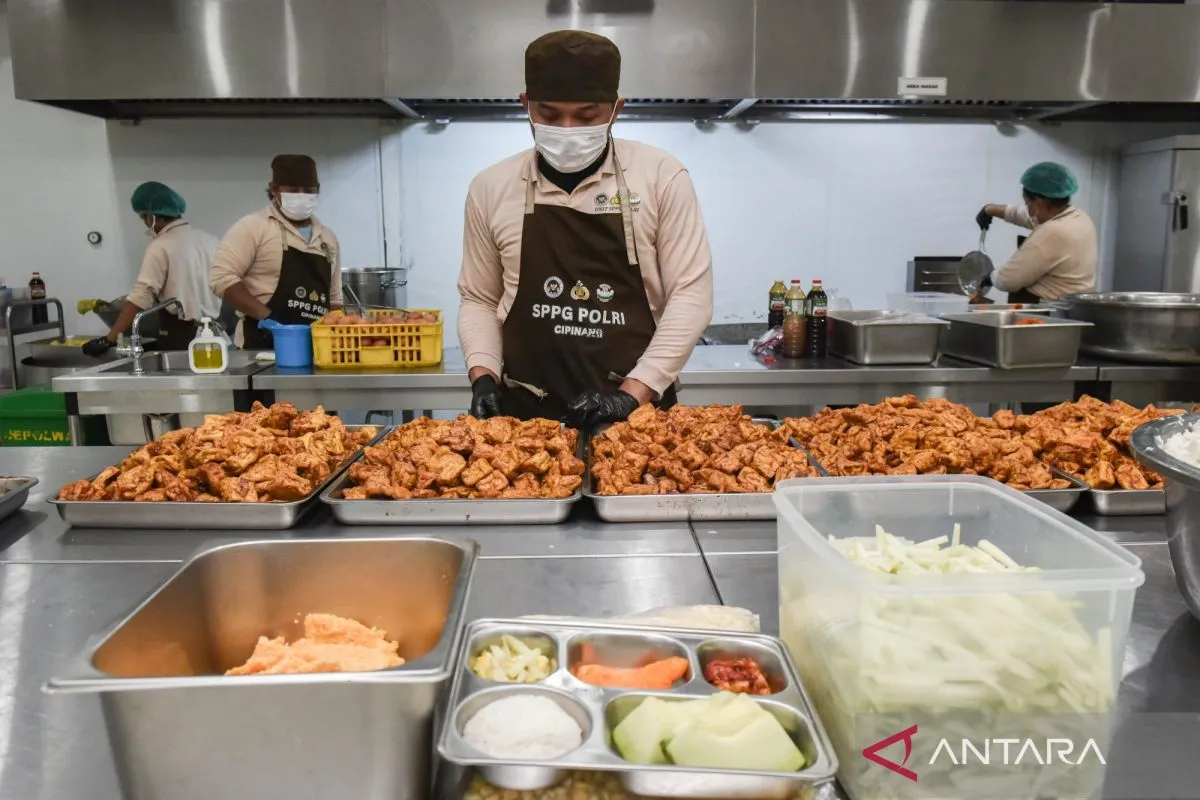
Speaking at a working meeting with House of Representatives Commission VII in Jakarta on Monday, Maman said the program not only helps meet nutritional needs but also drives regional economic activity.
He said the MBG ecosystem also involves around 12,000 cooperatives, 1,358 village-owned enterprises (BUMDes), 64,000 suppliers, and 662 Red and White Village Cooperatives.
According to him, suppliers provide food ingredients as well as operational needs for MBG kitchens, including water, gas, and soap.
Maman said MBG kitchens — formally called Nutritional Fulfillment Service Units (SPPG) — are generally operated by medium-sized businesses due to the large capital required, while micro and small enterprises are focused on the supply chain.
"What should be highlighted is whether the involvement of micro and small businesses in the supply chain has been expanded as widely as possible," he said.
He added that the MBG program has the potential to create a new economic ecosystem with an estimated transaction value of Rp300 trillion (around US$17 billion) this year.
Related news: Indonesian govt expands MSME support, poverty alleviation programs
Related news: Gov't accelerates recovery of disaster-affected MSMEs through MBG
Translator: Shofi A, Asri Mayang Sari
Editor: Anton Santoso
Copyright © ANTARA 2026


