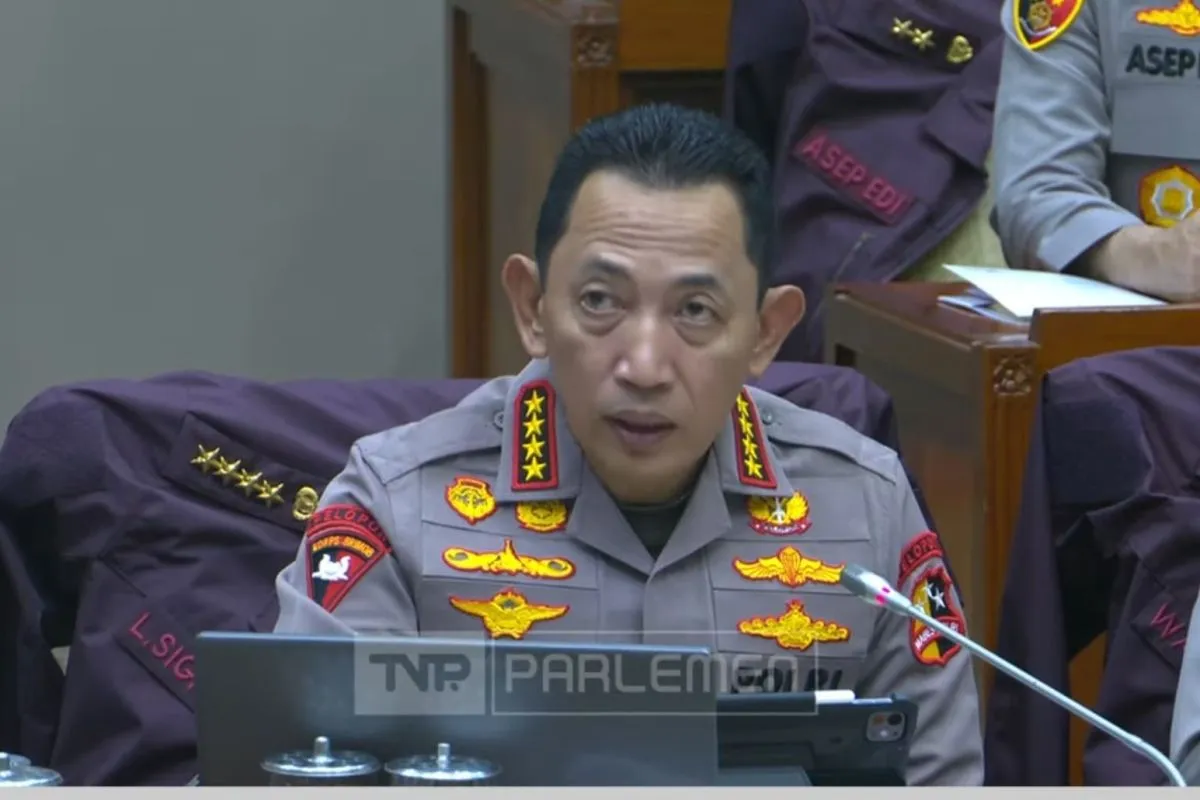
Speaking at a working meeting with House of Representatives (DPR) Commission III and regional police heads nationwide here on Monday, he highlighted Indonesia’s vast geography and population.
“We have 17,380 islands and, as the President noted, when laid out the country spans from London to Moscow,” he said.
Given these conditions, he said it is ideal for the police to remain under the President to ensure optimal and flexible performance.
He added that the police institution has undergone various stages of organizational development.
The police, he continued, were once under a ministry, the prime minister, and within the Indonesian Armed Forces with the military, using militaristic approaches, before later separating.
That separation, he said, became momentum to rebuild doctrine, accountability mechanisms, and preparations toward a roadmap for a civilian police force.
“The police uphold to serve and protect and the principle of tata tentrem kerta raharja, meaning peaceful, orderly, and prosperous conditions, not to kill and destroy,” he said.
Related news: Prabowo urges TNI, Polri to uphold law and protect sovereignty
Earlier, Coordinating Minister for Legal, Human Rights, Immigration, and Corrections Yusril Ihza Mahendra revealed ideas of placing the police under a ministry within reform discussions.
He said the concept mirrors the Defense Ministry’s oversight of the military.
“All such ideas are not final, and the commission will submit alternative recommendations to the President,” Mahendra said.
Meanwhile, some commission members favor maintaining the current police structure.
However, he said the final decision rests with President Prabowo Subianto and the House of Representatives, as the structure, duties, and accountability of the National Police are detailed in law, even though they are already regulated under the 1945 Constitution.
Related news: Government considers rules for police use of body cameras
Translator: Nadia, Kenzu
Editor: Rahmad Nasution
Copyright © ANTARA 2026


