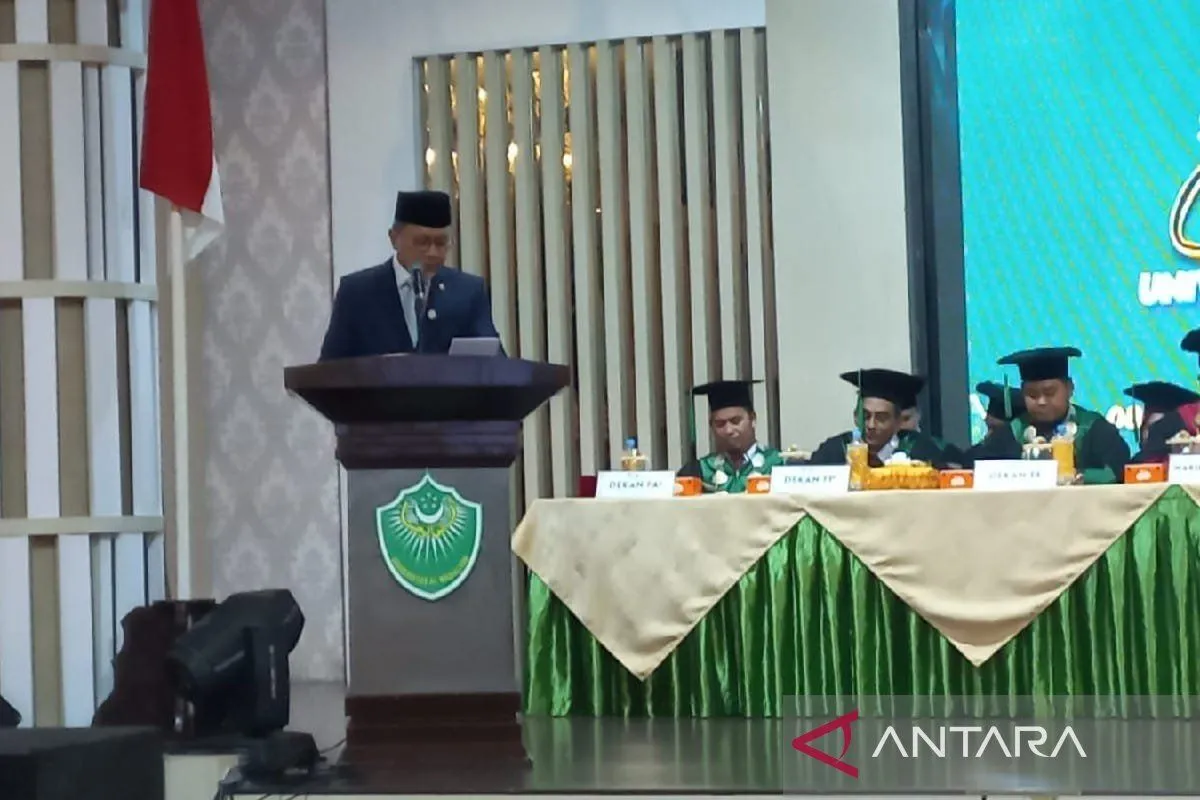
“One-third of Indonesians depend on agriculture, livestock, and fisheries, and many among them still live in poverty,” Hasan said during his address at the 2025 graduation ceremony of Univa Medan in North Sumatra on Thursday.
He noted that under the administration of President Prabowo Subianto and Vice President Gibran Rakabuming Raka, the flagship food self-sufficiency program aims to raise the living standards of farmers, fishers, and breeders across the country.
The program, he explained, covers a broad range of essential commodities, including rice, corn, and protein sources such as fish and livestock products.
“We will develop large-scale fish ponds in every district and establish 2,000 fishing villages, as the country needs to boost its fish supply,” he stated.
Hasan expressed optimism that the program would lift low-income communities and strengthen rural economies if implemented effectively.
He added that the increase in domestic rice production has already improved farmers’ welfare, as reflected in the rise of the farmers’ exchange rate (NTP) from 116 points in 2024 to 124 points in 2025.
“Farmers are now more prosperous, and the focus is expanding to fisheries and livestock. God willing, the NTP will rise again in 2026,” he remarked.
The minister further noted that Indonesia, which imported 4.5 million tons of rice last year, has stopped rice imports and now maintains a domestic stock of around four million tons.
Hasan emphasized that through the self-sufficiency program, farmers’ welfare continues to improve, with similar benefits expected to reach fishers and livestock producers.
Related news: Indonesia committed to achieving soybean self-sufficiency : Minister
Related news: RI's agricultural exports surge 38.25 percent in early 2025: minister
Related news: Indonesian govt calls proper waste handling key to food security
Translator: M. Sahbainy, Aria Ananda
Editor: Azis Kurmala
Copyright © ANTARA 2025


