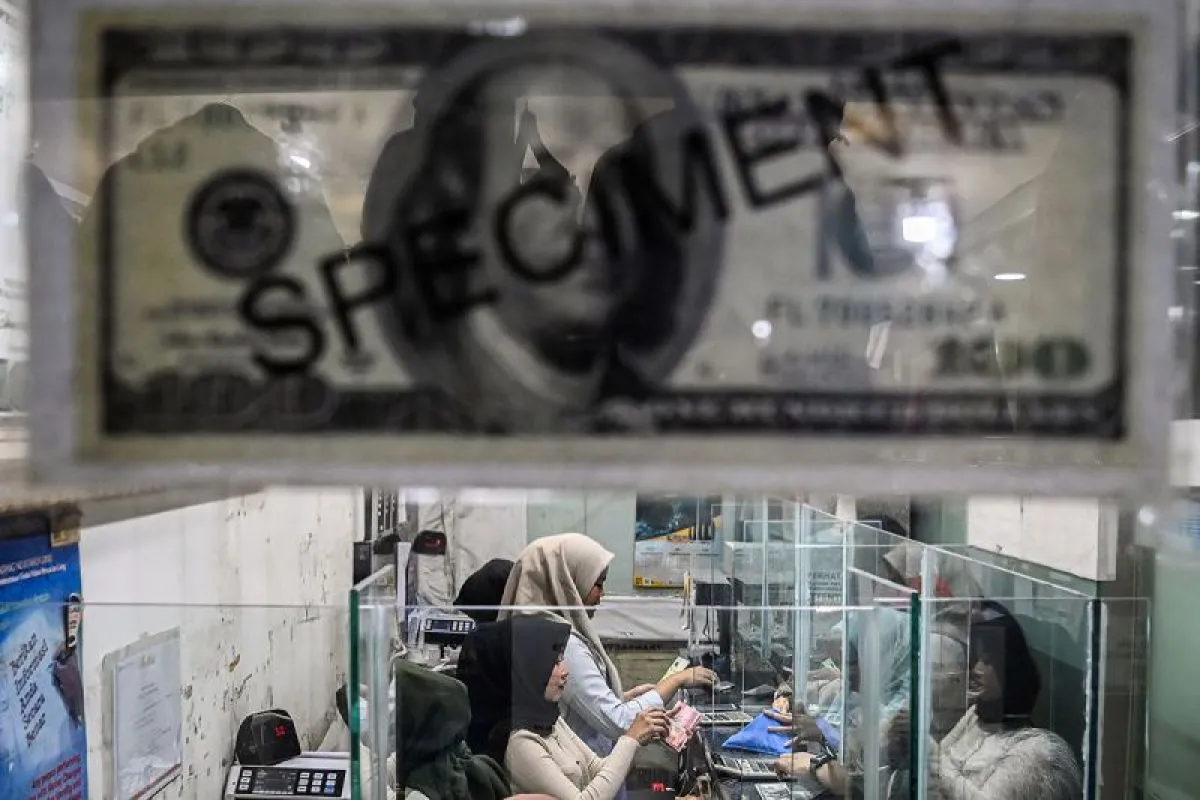
Amid rising global uncertainty, the government and Bank Indonesia have responded with coordinated intervention policies aimed at containing volatility in currency and bond markets.
A key initiative is the planned activation of a bond stabilization fund, or BSF, designed to support Indonesia’s sovereign bond market and prevent a sharp rise in government bond yields.
The policy, announced by Finance Minister Purbaya Yudhi Sadewa, signals the government’s determination to prevent rupiah weakness from triggering broader market panic.
Containing government bond yields is viewed as essential to preserving investor confidence in Indonesian assets.
When yields rise sharply, bond prices fall, increasing potential capital losses for investors and raising the risk of larger foreign capital outflows.
The BSF is intended to serve as a market buffer through bond buybacks and stabilization measures aimed at supporting sovereign debt prices.
Such intervention tools are widely used by governments during periods of extreme financial volatility and market stress.
In certain circumstances, policymakers consider intervention necessary to prevent panic from spreading through the financial system.
Still, the success of the BSF depends largely on whether investors see the measure as temporary stabilization or evidence of deeper economic vulnerabilities.
The government appears aware of those concerns. Purbaya stressed that Indonesia’s fiscal position remained secure despite pressure on the rupiah.
He said fiscal simulations had already incorporated exchange-rate assumptions above levels outlined in the 2026 state budget.
The message is intended to reassure investors that the government retains adequate fiscal space to withstand external shocks.
At the same time, Bank Indonesia has intensified intervention efforts to stabilize the currency and financial markets.
Governor Perry Warjiyo announced seven stabilization measures, including foreign exchange intervention and purchases of government bonds in secondary markets.
The central bank is also seeking to attract foreign capital through Bank Indonesia Rupiah Securities, or SRBI, while limiting domestic US dollar purchases.
The coordinated response reflects unusually close cooperation between Indonesia’s fiscal and monetary authorities during a period of heightened market stress.
In times of financial instability, markets often respond positively when governments and central banks pursue aligned policy actions.
However, excessively close coordination can also create concerns about the independence of monetary policy.
Global investors are highly sensitive to signs that central banks may be prioritizing government financing needs over monetary stability objectives.
Those concerns were highlighted by Yusuf Rendy Manilet from the Center of Reform on Economics, or CORE.
According to Yusuf, the BSF could be effective as a temporary stabilization tool but should not become a permanent market mechanism.
The concern reflects the bond market’s role as a price-discovery system that measures economic, fiscal and political risks.
When state intervention becomes dominant, markets may lose part of their ability to assess risks objectively.
In the short term, aggressive intervention may stabilize yields, ease volatility and reduce pressure on the rupiah.
Yet heavily managed stability can also create an illusion of calm in financial markets.
Investors may become less disciplined in assessing risks if they believe the government will always support bond prices.
Such expectations can create moral hazard by encouraging excessive risk-taking under assumptions of implicit state protection.
In that situation, market participants retain profits while potential losses are effectively shifted onto the public balance sheet.
Another major concern involves the fiscal burden associated with prolonged market intervention.
Although the government says fiscal space remains adequate, supporting bond markets requires significant financial resources if external pressures persist.
Indonesia’s foreign exchange reserves recently fell to US$146.2 billion, underscoring the costs associated with defending the rupiah.
While reserves remain above international adequacy standards, the decline highlights the trade-offs involved in maintaining currency stability.
Pressure on emerging-market currencies has intensified globally amid persistent U.S. interest rates, geopolitical uncertainty and volatile capital flows.
Indonesia is not alone in facing those pressures, though policymakers must calibrate responses carefully to avoid alarming investors.
Bank Indonesia’s restrictions on US dollar purchases, for example, are intended to reduce speculative demand in domestic markets.
However, such measures must be communicated carefully to avoid signaling that rupiah pressures have become severe.
The same sensitivity applies to aggressive government bond purchases conducted by Bank Indonesia or fiscal authorities.
Markets could interpret excessive intervention as evidence that the domestic bond market is losing its natural balance.
In modern financial markets, investor perception can become as important as underlying economic fundamentals.
As a result, Indonesia’s main challenge is not only restoring short-term stability but also preventing long-term market dependence on state intervention.
Investors ultimately need confidence that Indonesia’s economic resilience rests on strong fundamentals rather than liquidity support alone.
Transparent policymaking, fiscal discipline and consistent communication remain essential to maintaining market credibility.
The activation of the BSF and broader rupiah stabilization measures demonstrate that Indonesian authorities are moving quickly to contain financial pressures.
Such actions are understandable amid rising global uncertainty and volatile capital movements across emerging markets.
Still, the long-term success of those policies will depend not only on defending the rupiah, but also on preserving fiscal credibility and central bank independence.
Durable stability is not defined by complete state control over markets, but by allowing market mechanisms to function without permitting volatility to escalate into systemic crisis.
Copyright © ANTARA 2026


